Blog Page 2

Modern Web App Testing: Combining DAST with Runtime Signals

0

Web application security has changed. Teams now push code dozens of times per day, and attackers use AI-generated payloads and zero-day exploits. DAST has been a solid part of application security for years. But running DAST scans by themselves is not enough anymore. 

You get better results when you combine DAST with real-time runtime signals. That combination helps you find vulnerabilities faster, decide which ones to fix first, and actually fix them sooner.

The Limitations of Traditional DAST

Security teams have depended on traditional DAST for years. It tests running applications by simulating external attacks and can spot vulnerabilities like SQL injection, XSS, or misconfigurations.

The problem is that it works in isolation. It has no visibility into the app’s actual runtime behavior or business context, so it often generates noisy results and misses context-specific issues.

To improve things, organizations have adopted newer DAST tools with stronger crawling and authentication features. But these tools really shine when connected to live runtime signals. That turns periodic scanning into continuous, context-aware testing.

What Are Runtime Signals?

Runtime signals are telemetry data emitted by your application while it runs in production.

They typically include:

  • Real-time traffic patterns (request rates, user geolocations, unusual HTTP methods);
  • Performance metrics (response times, error rates, memory usage);
  • Security events (failed logins, odd input lengths, WAF alerts);
  • Business actions (payments, privilege changes, data exports);
  • Deployment signals (new versions, config changes, feature flags).

They come from APM, cloud monitors, logs, or RASP agents — live user behavior, not synthetic scanner traffic.

How DAST + Runtime Signals Work Together

Combining DAST with runtime signals creates a feedback loop that enhances both security testing and threat detection. Here’s how the integration works in practice:

1. Smarter Scan Targeting

The scanner no longer tests every endpoint equally. It listens to live traffic and focuses on what’s actually happening: which APIs are in use, which parameters are dynamic, and which flows are active. Then it prioritizes high-traffic or suspicious endpoints.

Example: if signals show a spike in failed logins from a new location, the tool can run targeted brute-force tests on that endpoint.

2. Reduced False Positives

False positives remain a major issue in DAST. They create noise and waste team time.

Runtime signals add useful context and help reduce them. When a scan detects a possible SQL injection, the system checks live data:

  • Is there a real database behind the endpoint?
  • Are queries properly parameterized?
  • Did any errors show up in the logs?

This approach often cuts false positives by 50–70%, based on industry benchmarks.

3. Exploitability Scoring Based on Live Context

Not all vulnerabilities are equally critical. A reflected XSS on an internal admin panel behind a VPN is much less urgent than the same flaw on a public login page.

Runtime signals give the missing context — whether the endpoint faces the internet, if a WAF blocks XSS, or if sensitive data is passing through. By mixing DAST results with this live telemetry, teams can generate dynamic risk scores that update as usage or deployment shifts.

4. Continuous Testing in Production

DevOps today requires security testing in production, not just before deployment. Runtime signals enable always-on DAST.

When a new feature is released, deployment signals trigger a focused scan on the changed parts only. If traffic data shows a new API gaining traction, the scanner re-evaluates it. This keeps testing continuous, low-noise, and respectful of production stability.

Practical Implementation Patterns

To make DAST and runtime signals work well together, most teams use one of these practical patterns:

Pattern 1: Agent-Assisted DAST

You place a lightweight agent inside the application runtime — think Java agent or eBPF module. It quietly collects data on method calls, database queries, and how output is encoded, then shares it with the DAST engine. This gives the scanner clear proof that a payload actually hit a critical function.

Pattern 2: Log-Driven Orchestration

Send all your runtime signals into a central log system such as ELK, Splunk, or Datadog. Then build a small orchestrator that monitors for triggers — like 5XX errors going over 2% — and fires off DAST scans via API. The results get correlated straight back to the logs, so you can validate them easily.

Pattern 3: Reverse Proxy Integration

Set up the DAST scanner as a sidecar to your reverse proxy (Nginx or Envoy). The proxy forwards a sanitized copy of live traffic to the scanner. This way, the tool can watch real requests and responses in real time, and optionally inject test payloads into a small slice of canary traffic.

Real-World Benefits and Metrics

Companies that have integrated DAST with runtime signals report tangible improvements:

  • 70% reduction in mean time to remediate (MTTR) – because runtime signals prioritize vulnerabilities actually under attack.
  • 3x faster scan times – by focusing only on endpoints with recent traffic or changes.
  • 90% decrease in critical false positives – using live code execution traces.
  • Early detection of business logic flaws – DAST can replay runtime-captured user journeys that bypassed normal checks.

Challenges and Considerations

This combined approach is not without hurdles. Privacy concerns arise when mirroring live traffic; proper anonymization is mandatory. 

Performance overhead from agent-based collection must be minimal (aim for <2% CPU). Also, not all DAST tools offer APIs or webhooks for runtime integration—choose modern tools built with extensibility in mind. 

Finally, start in a staging environment that mirrors production before moving to live traffic.

The Future: Predictive and Adaptive Security

AI and machine learning are pushing DAST toward prediction. Tools will use runtime signals to forecast weak spots from code churn or traffic spikes — scanning risky areas first, not everything.

Scanners will adapt too. If a WAF blocks standard SQLi patterns, the tool switches tactics.

Conclusion

Traditional DAST works, but it has limits. It runs in isolation, misses runtime context, and often generates noisy results.

Newer DAST tools help with better crawling and API support. But the biggest gain comes from adding real-time runtime intelligence. That shifts testing from periodic scans to continuous, smarter validation.


ChatGPT AI Photo Prompt Copy Paste Trending Girl Face 100% Match Viral Prompts

0

If you’re looking for Gemini AI photo prompts, viral Gemini AI prompts, Nano Banana prompts, AI photo editing copy-paste prompts, or a same face AI photo generator to create hyper-realistic images in seconds you’re in the right place.

Just upload your selfie, copy a trending prompt, and generate stunning 8K AI photos, Instagram viral edits, 90s Bollywood looks, cyberpunk portraits, and more with impressive face accuracy.

Perfect for boys and girls who want stylish, trending social media photos instantly. Below are some powerful prompts you can use to create your own amazing AI images.

Top ChatGPT AI Photo Prompt Trends for Girls 2026

Ultra-realistic lifestyle photograph captured with a modern iPhone camera, natural bright daylight, vertical portrait orientation (9:15). The image must look exactly like a real iPhone outdoor photo, not AI generated, with natural lighting, realistic shadows, and slight natural iPhone camera grain.

🔒 ABSOLUTE FACE IDENTITY LOCK (MOST IMPORTANT)
Use the uploaded reference photo as the ONLY facial identity reference for the female subject.
The generated face must match the uploaded face with 95–100% identity accuracy and must clearly look like the same person from the uploaded photo.

Preserve exactly:

same face shape
same jawline
same cheekbone structure
same eye shape and spacing
same eyebrows
same nose structure
same lips shape
same natural skin tone and texture
same hairstyle base and hairline
same facial proportions

Do NOT beautify the face.
Do NOT smooth skin unnaturally.
Do NOT generate a similar person.
The face must be instantly recognizable as the same person from the uploaded image.
Face identity accuracy is more important than pose, clothing, or background.

🚗 CAR
BLACK Mahindra Thar parked beside the subject.

Details:

glossy black paint reflecting sunlight
visible front grille and headlights
license plate clearly visible: HR26 P 1111
car parked casually outdoors

🧍 POSE
Stylish young woman leaning casually against the Thar.

Pose details:

one elbow resting on the car
relaxed natural posture
body slightly angled toward the car
looking sideways with a calm confident expression
appears like she is casually talking on a call
natural candid pose like a real street photo

👤 APPEARANCE
Female with exact uploaded face identity.

Hair:

Korean inspired medium wavy hairstyle

Outfit:

Brown linen shirt (slightly oversized feminine fit)
Beige bell-bottom pants

Accessories:

black wayfarer sunglasses
metal wristwatch

Style:

clean modern street fashion

🌿 BACKGROUND
Clean white wall behind the subject.

Details:

wall partially covered with lush green plants
small pink flowers growing around the plants
natural outdoor environment
bright daylight hitting the wall

📷 CAMERA & PHOTO STYLE
Shot on iPhone wide lens, realistic portrait framing, slight perspective distortion, crisp natural details, authentic smartphone dynamic range, subtle contrast, ultra-realistic candid street photography.

Authentic smartphone wide-angle selfie inside a black and orange sporty interior car with sunroof. The subject seated front left, left arm stretched toward camera, camera slightly above and in front, arm closest to lens. Roof fills top frame with sun visor and overhead console visible; sunroof shows trees, sky, power lines.

FACE LOCK (STRICT — ALWAYS 1:1)
Replace the subject’s face with the uploaded reference exactly 1:1, but with a natural feminine girl look.
Same identity, bone structure, proportions, expression, skin tone, hairline.
No reshaping. No slimming. No symmetry correction.
No beautification filters.
Identity overrides HDR, lighting, sharpening, and angle.
Natural healthy skin texture with visible pores. No plastic smoothing.
Soft feminine features only through styling, not face alteration.

Wearing loose-fit semi sheer linen pink pin striped shirt slightly unbuttoned, rolled sleeves and white loose-fit linen pants. Square frame reflective sunglasses, earbuds.

Left arm appears larger from perspective with visible skin texture.

Car interior matches exactly: rear headrests, seatbelt line, partial right front seat, rear window with washed-out street.

Lighting: mid-day bright sunlight hitting on subject from above/front, natural shadows. Style: slightly desaturated, high-contrast street look. Keep pose, framing, perspective, and mood identical. No additions or changes.

Ultra-realistic iPhone lifestyle photo captured in natural golden daylight, vertical portrait orientation (9:15). The image must look exactly like a genuine iPhone outdoor shot, not AI-generated. Realistic sunlight, soft shadows, natural skin texture, slight iPhone grain, true-to-life dynamic range.

🔒 ABSOLUTE FACE IDENTITY LOCK (MOST IMPORTANT)
Use the uploaded reference photo as the ONLY identity reference for the female subject.
Face must match 95–100% exactly and be instantly recognizable as the same person.

Preserve exactly:

same facial structure
same eyes, eyebrows, nose, lips
same skin tone
same hairline
same proportions
same natural expression

No beautification.
No face reshaping.
No smoothing filter.
Identity accuracy is highest priority.

🚙 CAR
Glossy black Mahindra Thar parked beside subject in luxury street setting.

Details:

front side angle visible
shiny black paint reflecting sunlight
headlights and grille visible
license plate: HR26 P 1111
premium rugged SUV presence

🧍 POSE
Confident stylish young woman standing beside the Thar.

Pose details:

leaning lightly on driver door
one hand holding sunglasses near face
one leg slightly crossed forward
body turned 45 degrees
looking at camera with bold calm attitude
natural candid model vibe

👗 APPEARANCE
Female with exact uploaded face identity.

Hair:

soft Korean layered wavy hairstyle moving slightly in wind

Outfit:

white fitted crop shirt
high-waist beige cargo pants
white sneakers

Accessories:

luxury watch
black sunglasses
small hoop earrings

✨ STYLE
Modern influencer luxury streetwear aesthetic, classy feminine energy.

🌿 BACKGROUND
Urban white textured wall with green vines, sunlight falling across wall, clean driveway floor, premium outdoor setting.

📷 CAMERA STYLE
Shot on iPhone wide lens, realistic depth, slightly low angle for power pose, sharp natural details, authentic smartphone photography, luxury Instagram reel thumbnail look.

Ultra-realistic smartphone photo captured with a modern iPhone camera, bright afternoon sunlight, vertical portrait orientation (9:15). Must look exactly like a real outdoor iPhone click, not AI-generated. Natural skin texture, realistic highlights, soft shadows, slight camera grain, authentic candid vibe.

🔒 ABSOLUTE FACE IDENTITY LOCK (MOST IMPORTANT)
Use the uploaded reference image as the ONLY identity source for the female subject.
Face must match 95–100% exactly and instantly look like the same person.

Preserve exactly:

same face shape
same jawline
same eyes and brows
same nose and lips
same skin tone
same hairline
same facial proportions

No beauty filter.
No face editing.
No smoothing.
No changing identity.

🚙 CAR
Black Mahindra Thar parked beside subject.

Details:

glossy black body
front tyre and grille visible
sunlight reflections on bonnet
license plate visible: HR26 P 1111
rugged stylish SUV presence

🧍 POSE
Stylish confident young woman standing in front of Thar.

Pose details:

one hand resting on bonnet
second hand holding phone near ear
body slightly tilted
one foot forward
looking sideways with attitude smile
natural boss-girl candid pose

👗 APPEARANCE
Female with exact uploaded face identity.

Hair:

long soft open hair with slight waves

Outfit:

black fitted kurti top with modern cut
light blue ripped jeans
white sneakers

Accessories:

black sunglasses on head
silver watch
bracelet

✨ STYLE
Bold Indian street fashion, confident desi influencer vibe, classy modern girl energy.

🌿 BACKGROUND
White wall, green plants on side, sunlight patches on wall, clean outdoor parking area, realistic Indian street environment.

📷 CAMERA STYLE
Shot on iPhone wide lens, slight low angle, natural perspective, crisp details, realistic daylight tones, viral Instagram lifestyle photo look.

How to generate images with ChatGPT AI ?

Generating images with ChatGPT AI is very easy. You just need to give a clear prompt (text instruction), and ChatGPT can create stunning AI images for you.

Step 1: Open ChatGPT

  • Go to OpenAI ChatGPT app or website and log in to your account.

Step 2: Choose Image Generation Option

  • Then, select the “Create Image” option.

Step 3: Upload Your Photo

If you want AI images with your own face, first upload your photo.

How to Upload:

  • Click the + / Add Photo & File
  • Select your selfie or photo from gallery / computer
  • Wait until upload completes

Step 4: Copy and Paste Detailed Prompt

  • Now copy any AI image prompt and paste it into ChatGPT.

Step 5: Click Generate

  • After pasting prompt, click send/generate.
  • ChatGPT will create your AI image in a few seconds.

Step 6: Download Image

Once image is ready:

  • Open image
  • Save / Download to mobile or PC

FAQs

1. Can I upload my own photo for AI images?

Yes, upload your photo and ChatGPT can create images using your face.

2. Do detailed prompts give better results?

Yes, clear and detailed prompts create more realistic images.

3. How long does AI image generation take?

Usually it takes a few seconds to generate an image.

4. Can I edit the generated image again?

Yes, you can ask ChatGPT to change background, clothes, style, and more.

5. Can I download the AI image after creation?

Yes, once the image is ready you can save or download it easily.


How Often Do Newborns Eat? A Complete Guide for New Parents

0

It’s common for parents to have like a thousand of questions in mind especially when it comes to newborn feeding. So, questions like how often do newborns eat is a pretty common one. And usually, you may notice how newborns can feel like they’re consistently feeding, this is because you’re not imagining it, it’s really happening. Newborn feeding patterns can feel just nonstop, unpredictable and sometimes it can get overwhelming. But this is completely normal and essential especially during the first weeks of life.  

In the newborn stage, feedings can shape the rhythm of the day with your little one. You’ll often sneak in moments of planning their naps, diaper changes and even those moments of rest around your busy day with their feedings and play. There are also times when your little one can fall asleep in your arms after nursing, other times they may need extra soothing. 

This is where the portable infant swing can prove its worth for you to catch your breath in between feeds. Understanding how often do newborns eat can help you build up more of your confidence and have the feeding of being reassured that what’s happening to them at this point is developmentally appropriate for them and this is what they really need.

Typical Feeding Frequency for Newborns

 Let’s now dive deep into the question of how often do newborns eat in those early weeks?

For most newborns it’s usually, 

  • Every 2 – 3 hours if they’re breastfed

  • Every 3 – 4 hours if they’re feeding on formula
     

This is about 8 – 12 times in 24 hours

Feedings significantly ramp up after a few days of birth, which are commonly observed with breastfed babies. This is also a good thing to happen so that you’ll have a steadier supply of milk. 

Many parents aren’t aware that when we say “every 2 – 3 hours” of feeding really means from the start of one feed to the start of the next one and not really the end. If your child’s feedings typically feeds for 30 – 40 minutes, their next feeding won’t be that far too long before the other one.

It’s common for babies to cluster feed at this point, especially nearing the night or the night itself. While going through the cluster feedings, babies usually nurse for hours and hours at a time which is usually pretty exhausting for an already exhausted parent. But this is with utmost importance as this makes feedings in the future more efficient and supports your healthy milk production. If you’re concerned whether the constant feeding you’re experiencing is still normal, the answer is almost always a big yes. This frequent feeding is the hallmark of the newborn stage. 

Recognizing Your Baby’s Hunger Cues

Checking out your child’s hunger cues and understanding them can be a lot more helpful rather than sticking to strict timelines 

Earlier hunger cues usually includes, 

  • Sucking of hands of fingers
  • Rooting
  • Lip Smacking
  • Stirring from sleep

Mid-level cues,

  • Squirming
  • Increased movement
  • Fussiness 

Late cue,

  • Crying

Being able to feed your little one after noticing those earlier cues are far better to lead to smooth feedings, both for you and your little one. In reality crying is the last and late hunger sign, and babies who’re already upset can put more struggle to latching or feeding calmly.  

Newborns don’t follow strict rules and schedules when it comes to their feeding. Their hunger is mainly driven by the rapid growth, stomach capacity and their metabolism. Observing their cues and being able to respond to them appropriately can be more successful rather than focusing on rigid timing and feeds.

Differences Between Breastfeeding and Formula Schedules 

It’s a given that newborns feed frequently, but there are key differences between breastfeeding and formula feeding.  

Breastfed babies – may usually eat more frequently since the breastmilk is easily digested and absorb by their body. Nursing 8 – 12 times per day is the usual count, but it could sometimes be more when undergoing growth spurts. 

Breastfeeding is also a supply-and-demand system whereas the more your child nurses, the more milk your body is compelled to produce. This is another major factor why feeding on demand is especially important for breastfeeding babies.  

Formula-fed babies – since the formula can take longer to digest, newborns who are formula-fed can go a bit longer in between feedings which could be 3 – 4 hours. When it comes to formula, its volume can matter more. Prants can easily track the ounces that their baby consumes per feeding that makes feeding patterns more measurable.

But regardless of the feeding method, answering the question of how often do newborns eat always comes down to each of their own feeding needs. There could be babies who are hungrier, while some others take smaller, much more frequent feeds. 

Why Newborn Stomach Size Matters for Feeding 

It’s unbelievable how incredibly small a newborn’s stomach is after birth. On day one, it’s only about the size of a cherry and by the third day, it grows to the size of a walnut. By the end of their first week, it’s closer to the size of an apricot. 

Since their stomachs are super tiny, newborns can only consume limited amounts at once. This is the main reason behind the question of how often do newborns eat, they need frequent refueling. Think about this as refueling a very small gas tank, which gets emptied out pretty quickly and needs to be refueled from time to time.  

Frequent feedings help support, 

  • Gaining healthy weight

  • Stabilizing blood sugar levels

  • Brain Development

  • Establishing milk supply
     

Having an understanding of your child’s stomach capacity can help normalize frequent feeding and also prevents any unrealistic expectations about longer sleep stretches in the earlier weeks of your child’s life.

The Importance of Feeding on Demand

Many experts advocates feeding newborns based on their demands rather than getting them into a strict feeding schedule. This usually means offering milk whenever your baby shows early signs of hunger.  

Why feeding on demand is so important?

  • It supports natural growth spurts

  • Prevents underfeeding

  • Builds up their trust and attachment to you

  • Regulates your milk supply (for breastfeeding parents)

When you’re trying to stretch out the feeding intervals early on can lead to fussiness, poor weight gain, or decreased milk production. During a child’s first month of life, it’s not on the scheduling side but rather being responsive. With time, their feeding patterns will naturally emerge. But in the beginning, you have to keep things very flexible when you want to get the answer of how often do newborns eat which is usually really as often as they need. 

Monitoring Wet and Dirty Diapers for Intake

One of the best ways to tell that your child is getting enough milk intake is checking their diaper output. 

During the first week,

  • Day 1 – at least 1 wet diaper

  • Day 2 – at least 2 wet diapers

  • Day 3 – at least 3 wet diapers

  • After the 5th day,

A stable output of 6 – 8 wet diapers per day

  • 3 – 4 bowel movements

Steady weight gain and a regular diaper output is a typical confirmation that they’re feeding pretty fine and enough. Rather than focusing on exact feeding intervals, keeping in track of their diaper output can give you a reassurance that they’re feeding well. 

Managing Nighttime Feeding Intervals

One of the most challenging parts of newborn care are those nighttime feedings. Now if you’re wondering how often do newborns eat at night, the answer is: whenever they need to. 

Many newborns can wake every 2 – 4 hours through the night. But there are some newborns that may need to be woken for feedings in the first week if they haven’t gained back their birth weight.   

To manage their nighttime feedings, you can 

  • Keep the lights very dim

  • Avoid stimulating interaction when they wake during the night

  • Prepare all possible supplies within reach

  • Use a side-lying feeding position if you’re comfortable doing so 

These nighttime feeds help support their growth and a healthy development. Although not gonna lie, it could be exhausting, but they’re temporary. By 6 – 8 weeks many babies can go for longer nighttime sleeping stretches. 

When to Expect Changes in Feeding Patterns

As your babies grows older, their feeding frequency changes gradually,

At around 6 weeks, 

  • Growth spurts can temporarily increase their feeding frequency.
    Around 2 – 3 months,
  • Feedings are more efficient.

  • Sessions can shorten.

  • Slightly longer naps may appear between feedings

Around 4 – 6 months, 

  • Some babies naturally increase feeding spaces further apart.

  • Nighttime stretches also lengthen

But every child is different on their special ways. Answering the question of how often do newborns eat can evolve into how often infant really eat, and those patterns can continue changing throughout the first year of your child’s precious life. 

There are other factors that can affect their feeding frequency temporarily, these could be due to illnesses, growth spurts, and developmental milestones at any stage of their lives.

Conclusion

If you feel like all your newborn do is eat and eat, you’re not alone, during the early infancy frequent feeding is one of its most defining characteristics. Their tiny stomach size, rapid brain development, and increased metabolic needs are considered great drivers of how often do newborns eat.

In most cases, it could range from 8 – 12 times of feeding everyday, but sometimes more when they go through growth spurts. Observing their hunger cues, keeping notes of their diaper output, and responding to their hunger cues and demand can prove to be a whole lot helpful than sticking to a pretty strict schedule especially in their early weeks. 

These days and nights can feel so long, but this stage is temporary. With enough time, feedings can become more predictable, their intervals will stretch and more predictable routines naturally form. For now, being their, being responsive, with patience and also self-compassion, you’ll get over this stage. You just have to trust the process.

Planning a Long Trip? Essential Add-Ons Your Bike Insurance Policy Should Have

0

Long bike trips can be exciting, but they also bring greater exposure to damage, breakdowns and sudden repair costs. A policy that works for daily travel may not always suit long-distance riding. Comprehensive bike insurance becomes more relevant when the journey is longer and the risks are wider.

This article explains which add-ons deserve attention before a long trip and how they can help make your policy better suited to the road ahead.

Why Standard Bike Insurance May Not Be Enough for Long Trips

Standard bike insurance may offer basic protection, but long trips often involve conditions very different from regular city riding. During long trips, riders often travel longer distances, face changing weather, ride on rough roads, and remain far from immediate help.

These conditions can increase both the chance of trouble and the cost of repairs. That is why add-on covers matter. They help address travel-related gaps that a basic policy may not fully cover.

Roadside Assistance Cover

Roadside assistance cover can be very useful on long routes because support is not always easy to find when a bike stops suddenly. Mechanical trouble, a flat tyre, battery failure or the need for towing can disrupt the trip and create stress.

This add-on provides roadside assistance if the bike breaks down during a trip. For long-distance travel, it can help riders manage unexpected breakdown situations, especially when they are in an unfamiliar place.

Engine Protection Cover

The engine faces extra strain during long journeys, especially on damaged roads, waterlogged areas or during long hours of riding. Damage caused by water entry, oil leakage or internal engine issues can lead to high repair costs. These costs may not always be covered in the same way under a standard policy.

Engine protection cover is therefore important to consider. It focuses on one of the most important and costly parts of the bike and improves the overall scope of protection.

Zero Depreciation Cover

During a claim, depreciation on replaced parts can reduce the amount payable under the policy, which may leave the policyholder paying more from personal funds. Zero depreciation cover is designed to reduce that burden by limiting the effect of depreciation on certain replaced parts, as per policy terms.

This add-on can be valuable for long trips because more time on the road may increase the chance of accidental damage and higher repair bills.

Consumables Cover

After an accident, the repair bill may include smaller but necessary items such as engine oil, brake oil, nuts, bolts, screws and lubricants. These consumables are used during repairs, and their cost can add up even when the visible damage seems limited.

The consumables cover is useful because it addresses this often-missed expense. For long trips, where a small incident can still lead to multiple repair charges, this add-on helps make the policy more complete.

Return to Invoice Cover

If a bike is stolen or declared a total loss, the insured value may not match the original invoice value of the vehicle. This difference can create a much larger financial setback than expected.

Return to invoice cover is meant to help bridge that gap, subject to policy terms and conditions. For long trips, where the bike may be parked in unfamiliar locations and used across many routes, this add-on becomes worth considering for stronger financial protection.

Personal Accident Cover for Riders

Long-distance riding increases time on the road, which also increases the importance of protecting the rider, not just the bike. Personal accident cover for riders is relevant because an accident can lead to financial strain in case of injury or disability.

This cover provides protection for the person riding the vehicle and is an important part of a well-planned insurance policy. For long trips, it should be considered a key safety factor.

Conclusion

Before a long ride begins, it is wise to check whether the policy suits the demands of distance, road conditions and extended travel time. Add-ons such as roadside assistance, engine protection, zero depreciation, consumables cover, return to invoice and rider accident cover can strengthen overall protection. When reviewing options or buying bike insurance online, choosing suitable add-ons can help create a better policy for long-distance travel and reduce the financial pressure that may arise during the journey.

Baby Sleepers: Your Guide to Comfortable, Safe but Practical Sleepwear for Your Little Babies

Two of the most important considerations when you’re choosing a sleepwear for your baby are safety and comfort. It goes hand in hand from the newborn days to toddlerhood, choosing the right baby sleepers can make your bedtimes more comfortable, diaper changes a whole lot easier, and nighttime wakings less disruptive. With a whole range of styles, fabrics and features available, picking what’s your style and what matters can help you build a sleep wardrobe that will support your child’s growth and development.

During those earlier months, a child’s sleepwear works alongside other soothing elements that surrounds your little one. Whether it’s their crib, bassinet, or the gentle rocking on the baby swing. The foundation of safe sleep remains the same, a firm surface, minimal loose items, and properly fitted baby sleepers. While a baby swing provides gentle movement and temporary comfort during those wake windows, a sleepwear’s role is regulating their body temperature to keep your child feeling secured and snug without the need for loose blankets.   

Essential Types of Baby Sleepers for Every Developmental Stage

Baby sleepers are made very special on their own way targeting different needs per age. As your baby grows, their mobility and sleep habits also changes, this then requires different types of sleepwear with each stage needs.

Newborn Stage (0 – 3 months)

  • Footed zip-up sleepers
  • Swaddle-compatible sleepers
  • Gowns with elastic bottoms for quick diaper changes

At this stage, it’s warmth and simplicity are what babies need. One-piece sleepers can minimize any exposed skin and reduce the need for additional layers.

Infant Stage (3–9 Months)

  • Footed pajamas
  • Two-way zip sleepers
  • Wearable blankets or sleeping sacks

As babies begins to roll and move more, flexibility and breathability becomes more highlighted.

Mobile Babies and Toddlers (9+ Months)

  • Footless sleepers
  • Two-piece pajama set (snug-fit)
  • Sleep sacks that has legs openings

Choosing an age-appropriate baby sleepers can ensure your child’s utmost safety while still supporting their freedom of movement.

Comparing Fabrics: Choosing Between Cotton, Bamboo, and Fleece

From the overall style and specific features of baby sleeper, choosing the most comfortable fabric type greatly impacts the overall comfort of a baby sleeper for your little one. This also significantly affects their temperature regulation, and skin sensitivity.

Cotton

This is the most popular choice when it comes to baby sleepers since it’s very breathable, durable and gentle especially on sensitive skin. It works well in moderate climates and layers easily.

Bamboo

This kind of fabric is ultra-soft ones that naturally moisture-wicking as well. It’s ideal for babies who sweat easily or may have eczema-prone skins. Bamboo sleepers are also pretty stretchy fabrics that accommodates growth spurts well.

Fleece

For that extra warmth, the fleece type of fabric surely gives you that, meaning this kind of fabric best suited for colder climates. But the downside is that fleece isn’t that breathable. This information helps you avoid overheating.

Room temperature and your child’s tendency to run cold or warm are factors that you should also be considering when you’re checking out the kinds of fabrics for your sleepers.

Key Features That Make Middle-of-the-Night Diaper Changes Easier

Sleep deprivation at any stage is real, and a thoughtful design features in a baby sleeper can make the nighttime diaper changes much easier and quicker to be less disruptive.

Look for:

  • Two-way zippers (the one that opens from the bottom)
  • Fold-over mittens for newborns
  • Snap closures placed along the legs
  • Stretchy neck openings

The two-way zippers can be much of help as they allow you to change your little one’s diapers without fully undressing your baby. This also keeps them warm and still sleepy even when being changed. Avoid sleepers that have complicated buttons or the ones that are hard-to-align snaps, they’re frustrating to deal with at 2 a.m.

Why Snug-Fitting Sleepwear Is a Critical Safety Requirement

Prioritize your child’s safety as well other than comfort, especially when selecting your baby sleepers. In many countries, a child’s sleepwear should be able to pass the flammability standards. Instead of using flame-retardant chemicals, most brands design sleepwear to fit snugly against the body.

Loose-fitting pajamas can be a greater fire risk since they allow more oxygen circulation around the fabric. Snug sleepers can.

  • Reduce flammability risks
  • Eliminate the need for loose blankets
  • Prevent fabric from bunching over the face

Always check on the sizing guide of your baby sleepers to ensure the fit is comfortable but still close to the body.

The Transition from Swaddling to Wearable Blankets and Sleep Sacks

Swaddling provides peak comfort by mimicking the feel in the womb. But once your baby grows signs of rolling, swaddling should stop immediately. At this stage, you can transition to:

  • Wearable blankets
  • Traditional sleep sacks
  • Transitional swaddles with arms free

Sleep sacks are paired well beautifully with baby sleepers, that replace loose blankets and maintaining warmth without restricting safe movement. As the babies grow more mobile, consider sleep sacks with leg openings for greater independence as well.

Managing Layers and TOG Ratings for Different Room Temperatures

Regulation of temperature is one of the most selling and important function of baby sleepers. Overheating is a known risk factor for sleep-related incidents, this is why having an understanding of layering is very much important. The Thermal Overall Grade measures up the warmth of a sleepwear and sleep sacks that you use for your little one.

General Guidelines:

  • 0.2 – 0.5 TOG: Warm climates or summertime temperature
  • 1.0 TOG: Mild temperatures
  • 2.5 TOG: Cooler rooms
  • 3.5 TOG: Cold environments

A cotton sleeper or a 1.0 TOG sleep sack is usually enough when paired with a room temperature between 68–72°F (20–22°C). It’s best to check on their chest or back rather than the hands or feet when checking whether your child is cold or feeling too hot, a slightly cool hands are usually normal.

Practical Tips for Building a Versatile Baby Sleep Wardrobe

You don’t really need a dozen pajamas, or a whole lot but having a functional rotation of baby sleepers can simplify your wardrobe choices.

General recommended quality,

  • 5 – 7 everyday sleepers
  • 2 – 3 warmer options
  • 2 lightweight options for the summer
  • 2 – 3 sleep sacks

babies usually grow a lot quicker, so avoid over-purchasing in one size. Neutral colors or mix-and-match designs can extend usability between siblings if you want. Keeping one extra sleeper in your diaper bag for emergencies are considerable.

Proper Care and Maintenance to Keep Baby Sleepers Soft and Safe

Keeping the softness and safety of baby sleepers can ensure the long-term comfort and durability of one which many parents go for, to get the most out of their money as well.

Washing tips to make your child’s clothes last longer,

  • Use gentle, fragrance-free detergent
  • Wash in cold or warm water
  • Avoid fabric softeners
  • Tumble dry on low heat

Regularly inspect your sleepers for,

  • Loose threads
  • Broken zippers
  • Worn-out elastics

Replace their sleepers that have become overly damaged or stretched. With proper care, you can preserve the integrity of the fabrics, keeps your baby comfortable and greatly extends the lifespan of each piece.

Conclusion

From the newborn struggles to toddler independence, the right baby sleepers create a strong foundation of safe and comfortable rest. By means of prioritizing fabrics that are breathable, snug fits, practical features and appropriate layering of clothes, you are supporting your baby’s sleep without any other complications.

All while soothing tools like a baby swing can be a great help at wake windows, it’s with the thoughtfully chosen sleepwear that gets them through even on rough nights. Great quality sleepers are amazing investments that you won’t regret buying.

With careful selection and considerations of factors that surrounds a restful sleep, you’re helping your child’s wardrobe to be more functional, safe and cozy throughout the precious stages of growth.

How to Use a Gold Loan Calculator to Plan Your Finances

0

A loan against gold is one of the most popular types of financing options in India. However, the loan becomes a burden soon if you do not manage it well. The loan amount you borrow should align with your financial needs so that you can repay it on time without straining your finances. Financial planning becomes easier with tools that simplify complex numbers and help you make better decisions when borrowing money. One such tool is a Gold Loan calculator. Once you enter your gold details in the calculator, it provides an estimate of the loan amount you can borrow. 

Let’s understand how the Gold Loan calculator works, how to use it online, and how it helps you stay within budget.

Understanding the Gold Loan Calculator

The Gold Loan calculator is a free online tool that helps you estimate how much money you can borrow by entering just a few details about your gold. It calculates the approximate loan amount based on:

  • Weight of the gold (in grams)
  • Purity of the gold (in karats)
  • Current market price of gold

The estimated loan amount by the Gold Loan calculator is based on the lender’s loan-to-value (LTV) ratio, which is the percentage of your gold’s value that they can sanction as a loan. 

For instance, if your gold is worth Rs 1 Lakh and the lender offers up to 85% LTV, you may be eligible for a loan of around Rs 85,000.

How to Use a Gold Loan Calculator

Here’s a simple step-by-step guide to using the Gold Loan calculator:

  • Go to the Calculator Page: Visit the lender’s website and open the Gold Loan calculator page.
  • Enter the Gold Weight: Fill in the total weight of your gold jewellery or coins. Make sure to exclude any non-gold parts, such as stones, beads, or other embellishments.
  • Select Gold Purity: Choose the purity level of your gold, typically between 18 and 22 karats. The higher the purity, the higher the potential loan amount. Some calculators use 22 karat gold purity by default. 
  • Check the Estimated Loan Amount: Once you enter the details, the calculator shows the estimated amount you may qualify to borrow. This gives you a clear idea of what to expect before visiting your lender’s branch.
  • Review and Compare: You can adjust the weight or purity values to see how they affect your eligibility. This flexibility helps you plan your borrowing amount according to your gold holdings.

Using an online calculator takes just a few seconds and requires no personal details. This benefit makes it fast, simple, and risk-free.

Why Use a Gold Loan Calculator?

Using a Gold Loan calculator before starting the loan process offers several advantages:

  • Accurate Planning: It helps you estimate how much you can borrow based on your gold’s current market value.
  • Transparency: You get an idea of the possible loan amount before visiting the lender.
  • Time-Saving: You can avoid unnecessary branch visits or paperwork if the estimated amount does not meet your needs.
  • Better Comparison: You can use the tool to compare loan amounts offered by different lenders before applying for a Gold Loan.
  • Financial Control: It helps you avoid over-borrowing and manage your gold assets wisely.

Planning Your Finances with the Calculator

The Gold Loan calculator is not only a tool to check how much you can borrow. It can also help you plan your finances responsibly. Here’s how it helps:

  • Set Realistic Goals: You can use the calculator to estimate the maximum loan amount you can borrow. Accordingly, you can decide how much you actually need and how much gold to pledge against the required amount to prevent over-borrowing.
  • Align Your Loan Application with Your Needs: If you need funds for a short-term purpose, you can check eligibility for a smaller loan by providing fewer gold ornaments. For larger needs, you can adjust your gold offerings accordingly.
  • Compare Different Scenarios: By changing the weight and purity values, you can track the difference if you pledge more gold or higher-purity ornaments.
  • Budget Your Repayments: Once you know the potential loan amount, you can estimate monthly interest payments and see how the Gold Loan interest rate affects them.

Factors Affecting Your Gold Loan Eligibility

While the calculator provides a close estimate of your gold valuation and the available loan amount, your actual eligibility may still vary based on these factors:

  • Purity of the Gold: Lenders generally accept only 18K to 22K gold.
  • Weight of the Gold: The more gold you pledge, the higher your eligible loan amount.
  • Market Price of Gold: When the gold prices increase, your loan eligibility rises accordingly, as the value of your pledged gold increases.
  • Loan-to-Value Ratio: The LTV ratio determines the maximum loan amount you can receive against the value of your gold. Depending on the weight and purity of your gold, lenders assess its market value and offer a loan amount based on a certain percentage of that value; typically between 75% and 85%.
  • Lender’s Policies: Each lender may have specific conditions or charges that affect the final approved loan amount.

Tips to Maximise Gold Loan Benefits

To make the most of your Gold Loan, keep these tips in mind:

  • Use pure gold ornaments (18K-22K) for higher valuation.
  • Compare Gold Loan interest rates from multiple lenders before finalising.
  • Repay your monthly interest payments on time to maintain a good relationship with your lender.
  • Reassess your eligibility regularly, especially when gold prices rise.
  • Choose reputed lenders for transparent terms and quick processing.

Conclusion

A Gold Loan calculator is one of the most practical tools useful for effective financial planning. It allows you to estimate your borrowing potential based on your gold’s purity, weight, and market value. When combined with a low interest rate, it helps you make well-informed borrowing decisions.

If you are considering applying for a Gold Loan, use a reliable Gold Loan calculator to get a quick estimate of your eligible loan amount. With competitive interest rates and trusted customer service, many lenders today offer a simple and stress-free Gold Loan experience to millions of satisfied borrowers.

Optimizing Living Spaces for Remote Work

0

Purposeful Space Planning

Consider the room dynamics before designating a workspace. Noise levels, natural light patterns, and temperature fluctuations play important roles in how a space can be utilized for work. Try experimenting with various locations in your home before settling on a permanent spot for the home office. It’s important to assess how the room feels throughout the day and how it complements your work habits. 

Nurturing Productivity Through Design

Colors also have a profound impact on mood and productivity. Choose a color palette for your workspace that is both invigorating and calming. Shades of blue are often associated with tranquility and can enhance concentration, while dashes of green may encourage creativity. It’s amazing how a stroke of paint can elevate a space from ordinary to inspiring.

Lighting is another significant factor in designing a productive workspace. Natural light can reduce eye strain and improve mood, so position your desk near a window if possible. If natural light is limited, use adjustable lamps to emulate daylight. A carefully chosen lighting arrangement can energize and sustain focus throughout the day. 

Sometimes, optimizing available space means parting with items that no longer serve a purpose. This process isn’t just about eliminating clutter; it’s about creating an environment that aligns with your current lifestyle needs. For those in urban settings, seeking services like Junk Jaws, a company that specializes in junk removal in Chicago, can be invaluable. Proper disposal and organization ensure you make the most of your home office setup without unnecessary distractions. 

Minimalism and De-cluttering

Think of your workspace as an ecosystem, where less is often more. Introduce storage solutions to keep necessary tools out of sight but within reach, such as using wall-mounted shelves or multi-compartment desks. Be selective with your decor; each piece should serve a purpose, whether it’s functionality or emotional comfort. By keeping your immediate environment organized, you’ll find that mental clarity often follows. 

Avoid the trap of accumulating unnecessary gadgets or stationery. Adopt a minimalist approach, where each item on your desk has a use. Besides clearing physical space, maintaining a tidy digital workspace is equally crucial. Regularly organizing your computer files and clearing digital clutter can mirror the sense of order in your physical surroundings.

Prioritizing Technological Setup

Redundancy is a significant consideration for maintaining productivity. Equip yourself with backup power sources, such as an uninterruptible power supply, to navigate power outages seamlessly. Additionally, familiarize yourself with mobile hotspots as alternatives where internet reliability is suspect, ensuring no workday is lost to technical interruptions.

Invest in ergonomic equipment that caters to your specific needs. Whether it’s a comfortable chair that supports good posture or a keyboard that reduces wrist strain, such investments in quality technology ensure that you remain at ease while working, minimizing distractions and bolstering overall efficiency. 

Maintaining Work-Life Balance

Another way to reinforce boundaries is through wardrobe selection. The act of ‘suiting up’ for work—even when staying home—can signal a mental shift from leisure to productivity. Once work hours conclude, change into more relaxed attire, symbolizing a return to personal time. Clothing becomes a simple yet effective tool in maintaining a mental distinction between phases of the day.

Encouraging Communication and Collaboration

To foster a sense of connectedness, set up occasional virtual team-building exercises. These activities can range from online games to shared virtual coffee breaks, offering colleagues a chance to bond over shared experiences outside standard work meetings. Navigating remote work culture involves keeping personal connections alive, no matter the physical distance. 

Create a digital open-door policy that makes you approachable, even if virtually. Encourage spontaneous video calls or use instant messaging platforms to facilitate quick questions and sharing ideas. This ongoing dialogue ensures everyone remains aligned, fostering a more cohesive and efficient work environment.

Designating Decompression Zones

Incorporate natural elements into your relaxation area to maximize its calming effect. Indoor plants, with their refreshing greens and life-affirming qualities, can enhance air quality and promote serenity. Integrating nature into these spaces isn’t just an aesthetic choice; it may cultivate a mini-escape from the day’s grind.

Consider aromatherapy as well, which can further enhance the tranquility of your designated de-stress zone. Scents like lavender and chamomile are known for their calming properties and can aid in relaxation, signaling your mind and body to unwind after a long workday. 

Creating Consistent Routines

Beyond the work itself, view personal routines with equal dedication. Incorporating evening rituals, such as a leisurely walk or a moment of mindfulness, can bring closure to the workday. This transition is essential for recharging, ensuring you greet each new day with renewed enthusiasm and a clear mind.

Why Business Travel Management Matters (and How to Choose the Right Platform)

0

In today’s fast-moving corporate world, business travel is no longer a luxury; it’s a necessity. Whether it’s meeting clients, attending conferences, or managing multi-location teams, companies rely on travel to grow and stay competitive. But without a proper system in place, business trips can quickly become expensive, inefficient, and stressful.

That’s where business travel management comes in. A well-structured travel management strategy helps organizations control costs, improve employee experience, and ensure policy compliance. At the same time, many companies are actively seeking reliable concur travel alternatives that offer better pricing, greater flexibility, and user-friendly features.

In this article, we’ll explore why business travel management matters and how to choose the right platform, with itilite highlighted as a major modern solution.

What Is Business Travel Management?

Business travel management refers to the process of planning, booking, tracking, and managing work-related travel for employees. It includes:

  • Flight, hotel, and transport bookings
  • Expense reporting and reimbursements
  • Travel policy compliance
  • Vendor negotiations and discounts
  • Risk management and traveler safety
  • Data tracking and reporting

A good travel management system centralizes all of this into one platform, making it easier for both employees and finance teams.

Why Business Travel Management Matters

1. Cost Control and Savings

Travel is often one of the largest controllable expenses for companies. Without a structured system, employees may book expensive flights or hotels without considering company budgets.

A strong Business Travel Management platform:

  • Enforces travel policies
  • Suggests cost-effective options
  • Provides negotiated corporate rates
  • Tracks spending in real time

Over time, this can reduce travel costs by 20–30% or more.

2. Better Employee Experience

Frequent travelers can easily get frustrated with complicated booking systems and slow reimbursements.

A modern platform simplifies the process by offering:

  • Self-booking tools
  • Mobile access
  • Quick reimbursements
  • 24/7 support

When travel is easy, employees can focus on their work instead of logistics.

3. Policy Compliance

Many organizations struggle with employees booking outside company guidelines. This leads to budget overruns and inconsistent processes.

Business Travel Management tools help by:

  • Automating policy enforcement
  • Setting approval workflows
  • Providing in-policy recommendations

This ensures compliance without constant manual monitoring.

4. Real-Time Visibility

Finance and HR teams need to know where employees are traveling and how much is being spent.

A centralized system provides:

  • Real-time tracking
  • Spend analytics
  • Custom reports
  • Budget forecasting

This visibility helps leadership make smarter decisions.

5. Risk and Safety Management

Employee safety is a major concern, especially during international travel or uncertain situations.

Travel management platforms help companies:

  • Track traveler locations
  • Send alerts during disruptions
  • Provide emergency support

Duty of care is not just a legal requirement; it’s also good business practice.

Why Companies Look for a Concur Travel Alternatives

SAP Concur is one of the most well-known travel management solutions. However, many businesses look for a concur travel alternatives due to:

  • High pricing
  • Complex interface
  • Lengthy implementation
  • Limited flexibility for small and mid-sized businesses

Companies today want solutions that are easier to deploy, more affordable, and better suited to modern workflows.

This has led to the rise of newer, smarter platforms.

Key Features to Look for in a Concur Travel Alternatives

If you’re evaluating platforms, here’s what to prioritize:

  • User-Friendly Interface

Employees should be able to book travel as easily as they shop online.

  • Automated Expense Management

The platform should auto-capture receipts and generate expense reports.

  • Policy Automation

Built-in rules should guide employees toward compliant bookings.

  • Real-Time Analytics

Dashboards should provide insights into travel spend and trends.

  • Integration Capabilities

Look for integration with HR, payroll, and accounting tools.

  • 24/7 Support

Travel disruptions don’t follow office hours.

itilite: A Smart Concur Travel Alternatives

One platform gaining strong attention as a concur travel alternative is itilite.

It is designed for modern businesses that want intelligent, cost-effective, and employee-friendly travel management.

Why itilite Stands Out

1. AI-Driven Savings

itilite uses intelligent recommendations to suggest the most cost-effective options. Companies often see significant reductions in travel spend.

2. Rewards for Savings

One unique feature is employee incentives for saving on travel costs. When employees choose economical options, they can earn rewards aligning personal and company goals.

3. Seamless Booking Experience

The platform offers a consumer-grade booking experience with flights, hotels, and cabs in one place.

4. Automated Expense Management

Receipts, approvals, and reimbursements are streamlined, reducing the finance team’s workload.

5. Real-Time Visibility

Companies get detailed analytics and reports to track spending patterns.

6. Strong Customer Support

Dedicated support ensures travelers are never stranded during disruptions.

How to Choose the Right Business Travel Management Platform

Here’s a simple step-by-step approach:

Step 1: Assess Your Needs

Consider:

  • Travel frequency
  • Budget size
  • Number of employees
  • Domestic vs international travel

Step 2: Compare Features

Create a checklist and compare platforms on:

  • Pricing
  • Ease of use
  • Automation
  • Reporting
  • Support

Step 3: Request a Demo

Always test the platform before committing.

Step 4: Check Scalability

Choose a solution that grows with your company.

Step 5: Evaluate ROI

The right system should pay for itself through savings and efficiency.

The Future of Business Travel Management

Business travel is evolving with technology. AI, automation, and data analytics are reshaping how companies manage travel.

Future-ready platforms will:

  • Predict travel costs
  • Offer dynamic policy controls
  • Provide personalized recommendations
  • Improve sustainability tracking

Companies that adopt smarter systems early gain a competitive edge.

Conclusion

Effective business travel management is no longer optional; it’s essential for cost control, employee satisfaction, and operational efficiency.

While traditional tools like Concur have dominated the market, many organizations now seek a more flexible and cost-effective Concur travel alternative.

Platforms like itilite are leading this shift by combining AI-driven savings, employee-friendly features, and powerful analytics. For businesses looking to modernize their travel processes, itilite is a strong option worth considering.

Investing in the right travel management platform today can lead to significant savings, happier employees, and smoother operations tomorrow.

The Ultimate Carry On Backpack Size Guide for Smart Travelers

0

Carry-on backpack sizes are confusing. There seems to be an endless array of options and volumes. Plus, backpacks come with so many different styles, attachments, zippers, and pockets just don’t always make sense.

You’ve got your trip all figured out. Flight plans? Scheduled. Hotel reservations? Booked. An itinerary that meticulously tracks everything you’re going to do every waking hour? Primed and ready. But when it comes to carry-on backpack size, you might still be a little lost at that. You don’t want to bring a bag that is so oversized because you’re definitely going to have unexpected fees for that. Airlines have strict size limits. So, bringing a bag of the right size will save you from unexpected delays.

In this article, you’ll learn the basics: the standard dimensions of carry-on backpacks for domestic and international flights, how personal items and carry-on differs, and how to measure your backpack. Aside from that, you’ll also understand the weight restrictions, how you can choose the right liter capacity, tips how you can fit a large backpack into the overhead cabins. And lastly, since the rules aren’t consistent, you’ll also know the common airline-specific rules for budget carriers. With these, you can be sure that your bag is ready to travel with you.

And if you’re travelling with your family, it is more important that you have the right carry-on backpack size. And it needs to be both compact and highly functional at the same time. Since travelling with essentials like an infant car seat and stroller is already complex. With the right size, you can store diapers, snacks, documents, and a change of clothes without the feeling of being bulky or unmanageable.

Standard Dimensions for Domestic Carry-on Backpacks

In the United States, the standard dimensions for domestic carry-on backpacks are around 22 x 14 x 9 inches. This already includes the handles, wheels, and external pockets. The backpacks in these sizes usually fit in the overhead cabins on the majority of airlines.

Aside from the height and weight of the backpack, the depth and structure are factors you need to consider, as well. Backpacks that are overstuffed can still exceed the size limits even if the listed dimensions are compliant.

Go for backpacks with compression straps and a smart compartment layout, especially if you are carrying extra items for your kids. In this way, you’ll stay within the size rules.

International Size Limits and Why They Are Smaller

When it comes to international flights, the recommended carry-on backpack size is usually smaller. Most international airlines, especially European and Asian airlines, operate smaller aircraft. Aside from that, their priority is the efficiency of the cabin space, and this directly affects the allowed carry-on backpack size.

Every airline is different, but the international carry-on limits range between 21 x 15 x 8 inches. These limits can even go smaller on budget airlines. Some carriers also apply weight limits. This means your bag should be only 7-10 kg, regardless of the physical dimensions of the bag. Your bag can still be rejected if it’s too heavy, even if it fits the size requirement.

International flights have way stricter limits because they tend to serve more passengers per cabin. They also have narrower overhead cabins and emphasize faster boarding times. Budget airlines also depend on baggage fees as a source of revenue. And this makes the compliance more important for travellers trying to avoid extra charges.

Personal Item vs. Carry-on: Knowing the Difference

Personal Item

A personal item is a smaller bag, which you bring onboard the plane, but store under the seat in front of you. This can be a purse, a laptop bag, a tote bag, or anything that can fit in the cube-shaped space under the seat. The typical size of a personal item is around 18 x 14 x 8 inches, but it can still vary by airlines.

A compact diaper backpack or essentials pack along with an infant car seat and stroller, may qualify as personal items, depending on the policies of the airlines.

Carry-On

A carry-on is the primary bag you bring onboard a plane and store in the overhead bin. This one is larger than the personal item, and can also be placed in the overhead bin. This is also where carry-on backpack size rules become important. As mentioned, there are airline dimension requirements that carry-ons need to meet.

Carry-ons are also more likely to be measured or checked during busy flights or on international routes. Don’t try to overpack or exceed the size limit if you don’t want forced gate-checking and added charges.

How to Measure Your Backpack Including Straps and Handles

Measure your carry-on backpack to know if it is still under the carry-on backpack size requirements. Now, this is where many of the travellers make mistakes. They only measure the main body of the bag. Airlines measure the whole backpack, including the straps, handles, and external pockets. Here’s how you can measure your backpack in the right way.

  1. Put in the bag the things you need for travel. Make sure that it is fully packed.
  2. Place the backpack on the floor or a table in an upright position. This way, you can measure it accurately and the measurements you get are consistent.
  3. Now, measure the height. Start from the bottom of the backpack to the highest point. Include the top handle, rolled fabric, or extended frame.
  4. Then, measure its width. Measure across the widest part of the backpack from side to side. External pockets or bulging sections are also included in the measurement.
  5. Measure also the depth of the backpack. Start from the front of the bag to the back, accounting for expandable compartments and packed-out pockets.
  6. Make sure you tighten, tuck in, or fold shoulder straps, hip belts, as well as the compression straps. In this way, they won’t add extra inches to the overall size.
  7. Always double-check the airline limits. Compare your measurements with your airline’s stated limits. Keep in mind that the airlines not just measure the main compartment, but also the entirety of the backpack.

Understanding Weight Restrictions for Cabin Baggage

Size limits are not the only thing you should watch out for. Weight restrictions for cabin baggage are just as important, too. Many travellers think that if their bag fits in the overhead cabin, it’s acceptable. But the truth is, several airlines, particularly international and budget carriers, have strict weight limits.

Usually, in domestic flights, the weight limits are not that strict. They only rely on the size compliance. But it’s different for international airlines because they have cabin baggage weight limits between 7-10 kg. Some carriers will weigh your backpack at check-in or the boarding gate. When you exceed the limit, it can lead to forced checking or you’ll have additional fees.

Airlines have weight restrictions, mainly because of the safety of the passengers as well as to maintain the balance on the aircraft. A backpack that is packed with heavy items, like electronics, books, or liquids, can easily exceed the allowed weight despite meeting the size requirements.

Choosing the Right Liter Capacity for Your Trip Duration

The right liter capacity will tell you how much you can pack without exceeding the limits imposed by the airlines. The capacity of a backpack is measured in liters. And that directly affects the weight and overall travel comfort.

  • Short Trips (1-3 Days)

If you’re on for a short trip, say 1-3 days only, a 20-30 liter backpack would be enough for you. This size works really well for business trips, as well. They can fit clothing, toiletries, and essentials. Additionally, they can easily fit under the seats or in the overhead bins.

  • Medium Trips (3-5 Days)

For medium trips, like 3-5 days, a 30-40 liter backpack works well. With this capacity, you have enough room for your multiple outfits, shoes, and electronics. This is also the go-to capacity of most travellers for its flexibility.

  • Longer Trips (5-7 Days)

If you’re going on longer trips, like 5-7 days, the backpack capacity for you is the 40-45 liter backpack. This capacity pushes the upper limit of standard carry-on backpack size, so you need compression straps and careful packing to remain compliant on airline rules.

Tips for Fitting a Large Backpack Into Overhead Bins

Yes, your backpack meets the maximum carry-on backpack size, but it can be a little difficult to fit it into the overhead cabin. Here are tips so you can fit your large backpack into the overhead bins in the airplanes.

  1. Tighten the internal and external straps of your backpack. Do this to reduce its volume.
  2. The jackets or scarves or other compressible items should be placed in the external pockets or along the edges. In this way, it is easier to slide the backpack into tight spaces.
  3. Place your backpack upright with the back panel against the bin wall. Or if the bin is short in height, just lay it flat.
  4. Remove the items that are protruding, like water bottles, infant accessories like an infant car seat and stroller parts, or bully jackets. Just stow them separately or under the seat.
  5. If your backpack is oversized or the overhead bin is full, your only choice is to gate-check it. Don’t worry because your bag will still arrive at your destination.

Common Airline-Specific Rules for Budget Carriers

It is mentioned that budget airlines have stricter rules for carry-on backpack size and cabin baggage. Below are some of the common airline rules to help you avoid unexpected fees or having to gate-check your backpack.

  • Many of the budget carriers, specifically in Europe and Asia, limit carry-on dimensions to around 21 x 15 x 7-8 inches. These dimensions are typically smaller than U.S. domestic limits.
  • Budget carriers have cabin baggage weight limits between 7-10 kg. Not like traditional carriers, they may weigh your backpack at check-in or boarding, with fees for anything heavier.
  • There are budget airlines that only allow you to bring a very small personal item. Additional items, like compact diaper bags or small backpacks, may have extra fees.
  • Gate-checking is required if your backpack exceeds the size or weight limits. This means your bag will be stored in the hold during the flight, even if you intended to carry it onboard.
  • Unlike full-service lines, most of the budget carriers will charge for all checked luggage. With that being said, it is better to stick to the allowed carry-on backpack size to avoid extra costs.

How to Convert OST File to PST for Outlook (Microsoft 365)?

OST file is created when you setup your Outlook 365 profile with Microsoft 365 at the default location on your system. As this file keeps all of your mailbox items locally, this allows you to access the items even without having access to internet connection. 

You need to note that the OST file is linked to the particular Outlook profile in which it is created. This signifies that you cannot directly open the file in the profile or account of any other users. You have to first convert it into the PST format if want to access the file items in other user account or profile. This article will explain how to convert OST file into PST for Outlook 365.

Understanding Common Reasons for Converting OST to PST

Below are the reasons why you need to convert the OST file into PST: 

  • To back up important mailbox data
  • To access emails when the Outlook account/profile is removed
  • To restore data from a corrupt or inaccessible OST file
  • To move mailbox data to a new system or Outlook profile
  • To extract emails from an old or inactive Exchange/Microsoft 365 account
  • To reduce mailbox size and store older data locally

Methods for Converting OST to PST for Outlook (Microsoft 365)

The methods, we have mentioned below, can help you to convert OST to PST format.

  1. Convert OST to PST using the Outlook Import & Export Wizard

Microsoft Outlook provides a built-in feature – known as the Import/Export Wizard – to convert OST file to a PST file. This is quite an easy and free way of converting OST to PST. But it works only when your Outlook profile is active and connected to the server. Here’s how to use this feature for converting OST file into PST:

  • Open Outlook. 
  • Go to File on the main menu.
  • Click on the Open & Export option.
  • Select Import/Export from the given options.
  • Next, select the Export to a file option.
  • Click Next
  • Select Outlook Data File (.pst).
  • Click on Next.
  • Choose the mailbox or the folders you want to export to PST file.
  • Click on Browse to choose a desired location to save the PST file. 
  • Click on Finish.
  1. Convert OST File to PST using Archive Feature

Outlook’s Archive feature is another option to convert your OST file into PST. Basically, this feature is used to move older mailbox items to a PST file. Follow the given steps to convert the OST file into PST:  

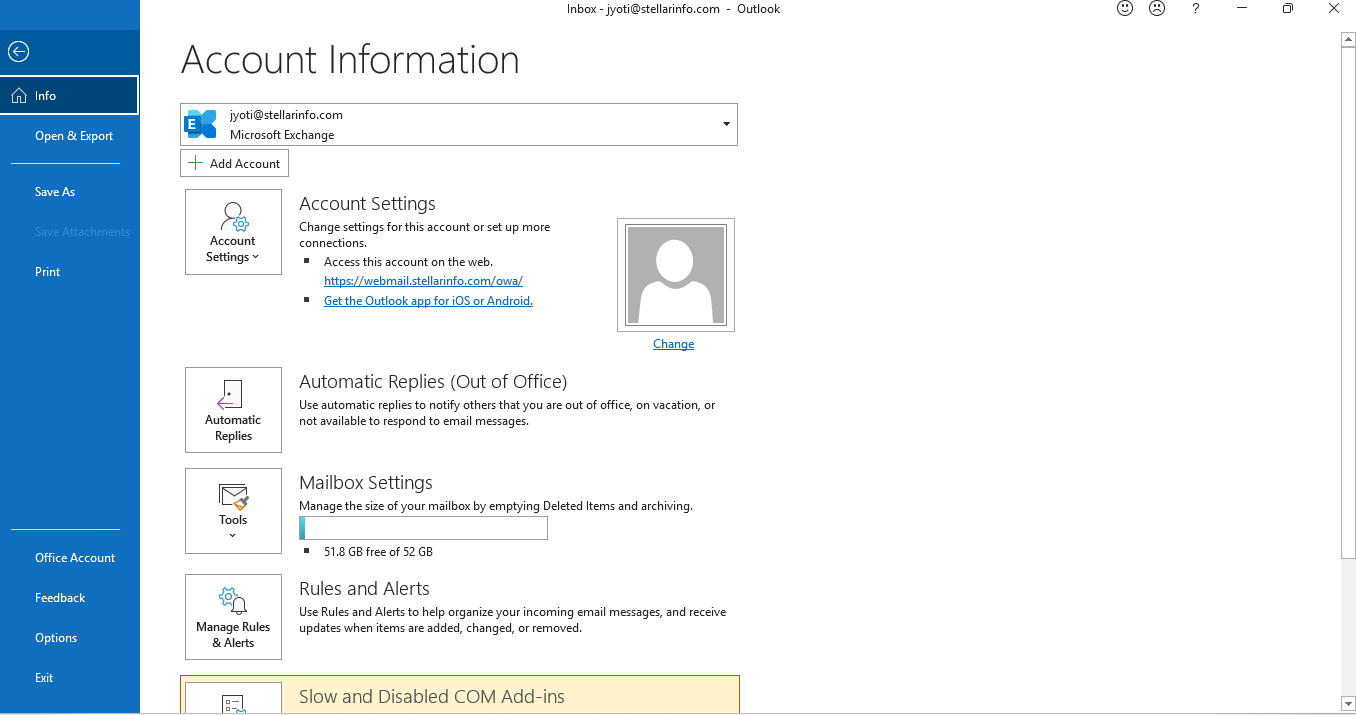
  • Go to File > Info in Outlook.
  • Click on the Cleanup Tools option. 
  • Select Archive.
  • Choose the “Archive this folder and all subfolders” option and then select the folders you want to archive.
  • Specify a date under Archive items older than.
  • Click Browse to choose a location to save the PST file.
  • Click OK to start the process.
  1. Use a Professional OST to PST Converter Tool 

Using a professional OST to PST converter tool is one of the fastest and easiest ways for OST to PST conversion. You can use Stellar Converter for OST to convert your OST file to PST. This software can convert OST files of IMAP, Office 365, and Hosted Exchange accounts, without any hassle. What makes it stand out is that, this software can convert even orphaned, inaccessible, and encrypted OST files with complete precision and data integrity. 

This OST to PST converter tool can convert everything in your mailbox — emails, attachments, contacts, calendars, tasks, and journals. Apart from the PST format, the tool also lets you save data in MSG, EML, PDF, HTML, or RTF format. Plus, before saving, you get a clear preview of all your converted mail items.

Follow the steps given below to convert OST to PST using Stellar Converter for OST: 

  • First, go to the official website of Stellar, which is https://www.stellarinfo.com/
  • Download and install Stellar Converter for OST.
  • Open the software and select the option List Profile to automatically see OST files from the default location. 
  • If needed, choose Select Manually to pick the OST file from another path.
  • Click Convert to start the process.
  • Click OK after the conversion process is finished.
  • Now, you’ll see all your OST mail items in a preview window.
  • Click Save Converted File from the main menu.
  • Choose PST as the output format and then click Next.
  • Click Browse to choose where you want to save the PST file.
  • Click OK.

The software will save the converted OST file items in the PST file. 

Conclusion

You can follow the above methods to convert the OST file into PST format. However, the manual methods will not work in case of orphaned or inaccessible OST files or when the Outlook is not working. In such a case, using a professional OST to PST software, such as Stellar Converter for OST is the only option. It recovers emails, attachments, contacts, calendars, and tasks from such an OST file and save them in PST while preserving data integrity.

Top IT Managed Service Providers for Large Enterprises

0

In today’s enterprise IT environment, choosing the right managed service provider (MSP) is a highly strategic decision. Large organizations with multi-site infrastructures, hybrid cloud deployments, heavy regulatory demands and global workforces need more than basic IT support. The top MSPs deliver scalability, comprehensive service portfolios, proactive governance and alignment with business goals. 

If your organization is assessing MSPs, the key is to look for partners that can act as true technology advisors — not just ticket handlers. Firms like Mindcore Technologies offer this model by providing full-stack managed IT, cloud, security and infrastructure services. 

What Makes an MSP “Top Tier” for Enterprises 

For large enterprises, the criteria that distinguish top-tier MSPs include: 

Enterprise-scale capabilities: 

Ability to support thousands of users, multiple geographies and 24/7/365 operations. Reports like the MSP 500 list from CRN highlight providers with this capacity. 

Broad service coverage: 

Managed infrastructure, help desk, cloud migration, cybersecurity and network operations—all delivered as one integrated system. Publications ranking the “top 10 managed service providers” often focus on this breadth. 

Strategic partnership orientation: 

Modern enterprises need MSPs that guide roadmaps, enhance performance and optimize costs—not just respond to issues. Today, break/fix models are obsolete for enterprise IT. 

Transparent governance and metrics: 

Clear SLAs, dashboards, escalation paths, predictable cost structures and executive-level reporting. 

Vendor and industry expertise: 

Recognized certifications, multi-vendor support and experience in regulated industries. 

Why Large Enterprises Invest in Top MSPs 

Enterprise firms manage complexity at scale: 

  • Thousands of endpoints 
  • Multi-site operations 
  • High-performance / data-heavy systems 
  • Hybrid cloud environments 
  • Compliance and risk management 
  • Global remote users 

Because of this, the right MSP delivers: 

  • Higher uptime and fewer disruptions 
  • Consistent, standardized performance across all sites 
  • Access to specialized experts 
  • Predictable operational costs 
  • Technology aligned with business outcomes 

Choosing a top MSP is foundational to maintaining a resilient, scalable enterprise IT ecosystem. 

Top IT Managed Service Providers to Consider 

Industry lists frequently highlight MSP leaders in enterprise markets: 

  • InfoMSP – Global Top 100 MSPs
  • Datamation – Top 10 Managed Service Providers 2025
  • UpCity – Top Managed Service Providers

These lists typically emphasize firms with large-scale support capability, cloud/hybrid strengths, advanced security operations and strategic advisory services. 

Why Mindcore Technologies Should Be on Your Shortlist 

Mindcore Technologies is built for enterprise-level managed services and offers many of the qualities found in top-ranked MSPs: 

  • End-to-end IT services , from infrastructure and cloud to security and help desk 
  • Support for multi-location enterprises , hybrid cloud ecosystems and complex technical environments 
  • Proactive, strategic operations rather than reactive ticket handling 
  • Executive-level governance with reporting, transparency and predictable cost models 

Leadership That Matters for Large Enterprise IT 

Mindcore’s approach is shaped by Matt Rosenthal, CEO & President , who brings over 30 years of experience in IT services , cybersecurity , enterprise operations and executive technology leadership. His background as a CIO, project manager and IT strategist for large organizations informs Mindcore’s enterprise-focused framework. That experience ensures clients receive structured, scalable and future-ready managed services designed specifically for large businesses. 

If your organization is evaluating MSPs for enterprise-scale operations, Mindcore Technologies is a strategic provider worth serious consideration. 

How to Choose the Right MSP for Your Enterprise 

Use the following checklist to evaluate MSP candidates: 

Service coverage & support reach 

Can they support all sites, remote users and hybrid cloud environments? 

Breadth of service offerings 

Do they cover help desk, cyber, cloud, infrastructure, network operations and strategic guidance? 

Industry & regulatory experience 

Have they served organizations with similar size, structure and compliance requirements? 

Governance & transparency 

SLAs, dashboards, reporting and regular reviews should be standard. 

Scalability & flexibility 

Can they support expansion, mergers, workload shifts and remote workforce demands? 

Strategic advisory capability 

Do they guide your roadmap and support long-term planning? 

References & track record 

Can they demonstrate large-enterprise success? 

Vendor ecosystem & certifications 

Strong partnerships with Microsoft, Cisco, AWS and other leading vendors. 

Selecting a provider that meets these criteria increases the likelihood of long-term success. 

Final Thoughts 

For large enterprises, selecting the right MSP isn’t simply about controlling costs — it’s about choosing a partner that delivers performance, resilience and long-term strategic value. The best IT managed service providers bring enterprise-scale capabilities, holistic service portfolios, transparent governance and technology alignment with your business goals. 

As you build your shortlist of top-tier MSPs, make sure Mindcore Technologies is included. With 30+ years of leadership expertise and a comprehensive enterprise service model, they deliver the maturity and strategic focus that large organizations require. 

​​ When Does Milk Supply Regulate After Birth? What New Moms Can Expect

0

Many​‍​‌‍​‍‌​‍​‌‍​‍‌ nursing mothers question how long it will take for their milk to stabilize after birth. During the first three weeks after delivery, it may appear that things fluctuate – your breast may be engorged at some point and less hard later, whileyour baby may eat more from one side and less from the other. Understanding what regulation is, approximately when it comes, and how to help your body get used to it can take the tension off and bring a nice feeling of support to the first few days with your ​‍​‌‍​‍‌​‍​‌‍​‍‌newborn.

When Does Milk Supply Usually Regulate After Birth

The​‍​‌‍​‍‌​‍​‌‍​‍‌ majority of women breastfeeding their babies observe that their milk supply stabilizes between six and twelve weeks postpartum. The initial weeks are characterized by your body producing milk as a result of hormonal changes. After the baby is born, the hormones signal production – frequently, therefore, one might experience heavy breasts, milk leaking without control, or simply being overwhelmed with the amount of ​‍​‌‍​‍‌​‍​‌‍​‍‌milk.

Over time, your body changes how it makes milk – it stops relying so much on hormones. Instead, milk output depends more on how frequently – and how well – the breasts are emptied, whether by feeding or using a pump. A comfy, snug-fit pick such as the Momcozy supportive breastfeeding bra gives steady support while things adjust, helping you stick to regular sessions without hassle. Once that change kicks in, what you produce usually lines up closely with what your little one actually drinks.

This timeline might not be spot-on. Some women see changes around 4 weeks, yet others don’t feel settled until 3 months after birth. Either way is totally fine.

Factors That Affect When Milk Supply Regulates

Various things might affect the timing and ease of your milk settling into a routine:

Feeding often at first tells your body how much milk to make. If you miss sessions or wait too long between them, it can delay balance.

Latch plus how well milk comes out: a good seal helps move more milk. If not enough milk drains, it might mess up the signals telling your body to make more.

Issues after giving birth may interfere with supply timing. Having a C-section might slow down when your milk comes in. Premature delivery can affect when breastfeeding starts. Health struggles during recovery could impact feeding rhythms.

Pumping routines: Going full pump or mixing breast and bottle can shift timing of supply control – especially when session times jump around. Instead of steady patterns, irregular schedules might delay adjustments your body expects.

Hormone shifts – like thyroid problems, PCOS, or leftover placenta bits – might change how much milk comes out. These things mess with your body’s balance so that supply can go up or down.

Being a mom can be exhausting – lack of sleep messes with your body’s chemistry, which might throw off hormonal patterns. Stress piles on top, adding confusion to how things run day to day.

Signs Your Milk Supply Is Regulating Normally

When breastfeeding starts, plenty of mothers fear their milk’s drying up – yet those shifts usually mean the body’s settling into a rhythm.

Typical clues that things are running smoothly might be:

  • Boobs get mushier, not so swollen after nursing
  • Less leakage during daytime hours
  • Milk doesn’t shoot out strongly when it starts flowing anymore
  • Baby drinks quicker while getting full faster
  • Pump flow stays steady instead of rising each day

Steady​‍​‌‍​‍‌​‍​‌‍​‍‌ flow is not really about lessening the milk – it is more about doing it properly. If the infant is gaining weight, has a good number of wet and dirty diapers, and appears to be content after feeding, then most likely the output is in accordance with their ​‍​‌‍​‍‌​‍​‌‍​‍‌needs.

Tips to Support Milk Supply Regulation

Though making milk happens on its own, you can help your body adjust by using gentle methods that fit your routine.

  • Let your little one eat when they seem hungry – don’t stick to strict times, particularly at first. Use their signals as your guide instead of a clock.
  • Start formulas late if possible – using them quickly or lots might mess up your body’s cues, slowing down balance.
  • Maintain steady pumping habits – when you’re expressing milk, aim for roughly the same times daily so your body keeps up a reliable flow.
  • Drink plenty of water while eating well – good energy intake plus regular meals can boost breastmilk supply over time.
  • Pick​‍​‌‍​‍‌​‍​‌‍​‍‌ good-fitting clothes that do not press against your body: comfort is a great help during nursing. How about a Momcozy nursing bra? It supports gently while giving the tissues the needed ventilation – hence less occurrence of blocked milk ducts during the adjustment of your body to milk ​‍​‌‍​‍‌​‍​‌‍​‍‌production.
  • Take breaks when you get the chance. Not sleeping enough messes with the chemicals that help make breastmilk, so catch some shut-eye if you can – quick dozes count too.

When to Seek Help for Milk Supply Concerns

Though shifts mid-cycle happen often, certain clues mean you should get help.

Get in touch with a lactation expert or medical pro when:

  • The baby is not gaining weight appropriately
  • When a baby’s nappy is wet or soiled, the amount they pee or poop often drops quite a bit
  • You’re dealing with ongoing discomfort, blocked milk passages, or breast inflammation – so it’s time to take action
  • Milk output can dip fast – sometimes overnight. One moment it’s steady, then outta nowhere, it plummets
  • You’re stressed or swamped when it comes to eating

Catching problems early usually fixes them fast – also stops bigger troubles later.

What to Remember About Milk Supply Regulation

Trying​‍​‌‍​‍‌​‍​‌‍​‍‌ to figure out the time when milk is going to be settled into a routine? The timing of milk settling into a routine is different for every breastfeeding pathway. It’s not a change that your milk supply is reduced; rather, it indicates that your body is becoming more efficient with your baby’s ​‍​‌‍​‍‌​‍​‌‍​‍‌intake.

Keeping​‍​‌‍​‍‌​‍​‌‍​‍‌ up with the routine might be hard at the beginning, especially because your physical condition is changing every day. However, if you continue with regular meal times, get stable support, and at the same time check your baby’s signs, it usually results in milk levels becoming even without additional work.

So, what is the main thing? It is not the quantity of the milk that is expressed, spilled, or that fills the bottle – the most important things are a well-fed little one and a mom who feels ​‍​‌‍​‍‌​‍​‌‍​‍‌supported.