Blog Page 8

GR8 CRM: The key to boosting player retention and driving iGaming success

0

Revolutionize your casino and sportsbook operations with GR8 CRM, a comprehensive customer relationship management solution that is already available online. It was designed to maximize player engagement and retention. This innovative platform empowers you to personalize communications, optimize marketing campaigns, and streamline CRM workflows. And the most important thing about the GR8 CRM is that you can enjoy all these features with one single, user-friendly interface. GR8 experts will help you with all the challenges you can meet when upgrading your platform with this new solution so you can get the best results.

What are the CRM solutions for casinos and sportsbooks advantages: more details from GR8 expert

Still not sure about the effectiveness of the GR8 CRM solution for your business? Then, just check if the average retention rate can be increased by up to 80% with it. Also, GR8 guarantees that you can boost your lifetime value by up to 20%. Among other great advantages you can enjoy while using the GR8 CRM solution are:

  • advanced segmentation with AI integration to create detailed player profiles and tailor communications;

  • simple creation of the targeted campaigns based on player behavior and preferences;

  • gamification tools (like leaderboards and rewards to increase player interaction);

  • simple manage communications (SMS, email, and web push notifications);

  • efficient workflow automation!

These advantages will be available from day 1 of integrating these solutions into your casino or sportsbook ecosystem. You can also choose the best bonus mechanics for your business in the Journey Builder. There, you will find all the important details about the variability of bonus packs and their conditions. The most important is that this CRM solution is available for both casinos and sportsbooks at any stage of their lifecycle.

Maximize the results from the GR8 CRM integration: learn how

How can you maximize the effectiveness of GR8 CRM? The first thing to start with is the leveraging of its advanced AI-powered segmentation. This will help you to gain deeper insights into player behavior and preferences. You can use these insights to create highly personalized marketing campaigns that resonate with individual players and drive engagement.

Additionally, do not forget to analyze the performance metrics available on your platform regularly. This is a really important action when you want to refine and optimize your communication strategies. It is also to ensure that your efforts meet the player’s needs and business goals.

By integrating the gamification features, you can easily increase player interaction and loyalty by making their experiences more engaging and rewarding. Finally, GR8 CRM should be integrated with other key systems to ensure seamless data flow and comprehensive customer insights, ultimately boosting overall efficiency and effectiveness.

How to Recover Files Deleted from Recycle Bin on Windows?

When you delete items such as files, photos, folders, etc., they are generally placed into the Recycle Bin on a Windows PC. Recycle Bin works as a ‘holding bay’ for the items deleted using only the ‘Del’ key. These items remain in the Recycle Bin for up to 30 days. After 30 days, the Recycle Bin gets empty, and the files get lost permanently.

However, there is a catch. If you deleted your files and other data using the Shift + Del key, the files would not be found in the Recycle Bin. They will be gone permanently. Hence, it is suggested to be careful while getting rid of unwanted data. While deleting some of your unnecessary or junk files, you may mistakenly lose your essential data.

So, if you have deleted your files, try the Do-It-Yourself (DIY) methods shared in this blog to recover deleted files on Windows PC. We also share some preventive measures to avoid file loss in the future!

Recover Deleted Files from Recycle Bin

If the files are deleted only with the ‘Del’ key, we suggest you open your Recycle Bin first and check if the deleted files are there.

  1. If you find your files there, right-click on them and click Restore.
  2. The files will be retrieved to the location from where you deleted them in the first place.

However, if you empty the Recycle Bin or use the Shift+ Del key to delete files and other data, they are permanently deleted. You won’t be able to find them in the Recycle Bin. To recover those files, follow the methods shared below.

Recover Files Deleted from the Recycle Bin

If the files are lost due to the above-shared reasons, the files will become inaccessible to you. Don’t fret! You can still recover deleted files from the Recycle Bin on Windows by following the given methods:

#1. Use File Backup

You can quickly recover files deleted from the Recycle Bin easily if you have a backup. Many people keep a backup of their important files, folders, documents, photos, and more using an external storage drive or Windows built-in backup utilities such as File History, Backup & Restore, and Previous Versions. If you have used any of these facilities to back up your files, you may quickly recover deleted data.

#2.  Recover deleted files with Windows Data Recovery Software

You may quickly recover files deleted from the Recycle Bin on a Windows PC using Stellar Data Recovery software. This DIY Windows data recovery tool can restore deleted documents, email files, photos, videos, and more. It makes Recycle Bin recovery possible and helps you retrieve lost or deleted files and folders on your Windows PC, laptop, or any external storage media. It also supports data recovery from formatted, corrupted, encrypted, and RAW drives. To recover files deleted from Recycle Bin, you need to run this software on your Windows PC from which you lost your data and scan the affected drive/location to retrieve the files. Follow the below steps and learn how to recover files deleted from the Recycle Bin:

  • Download, install, and run Stellar Data Recovery on your PC.
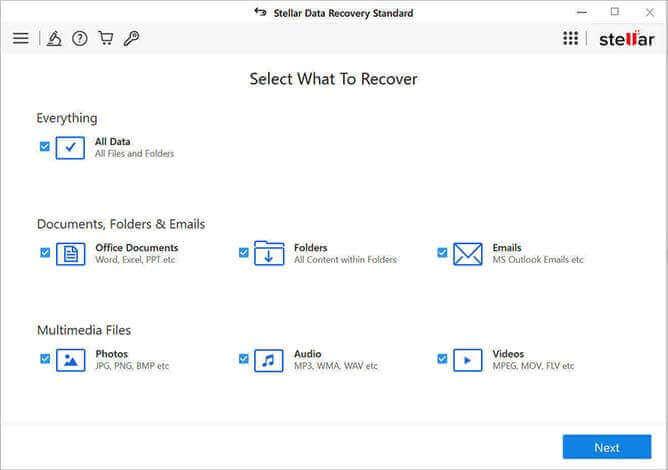
  • Launch the software, and you will see the ‘Select What to Recover’ screen.
  • From the ‘Select What to Recover’ screen, select either ‘Everything’ or the type of files you want to retrieve.
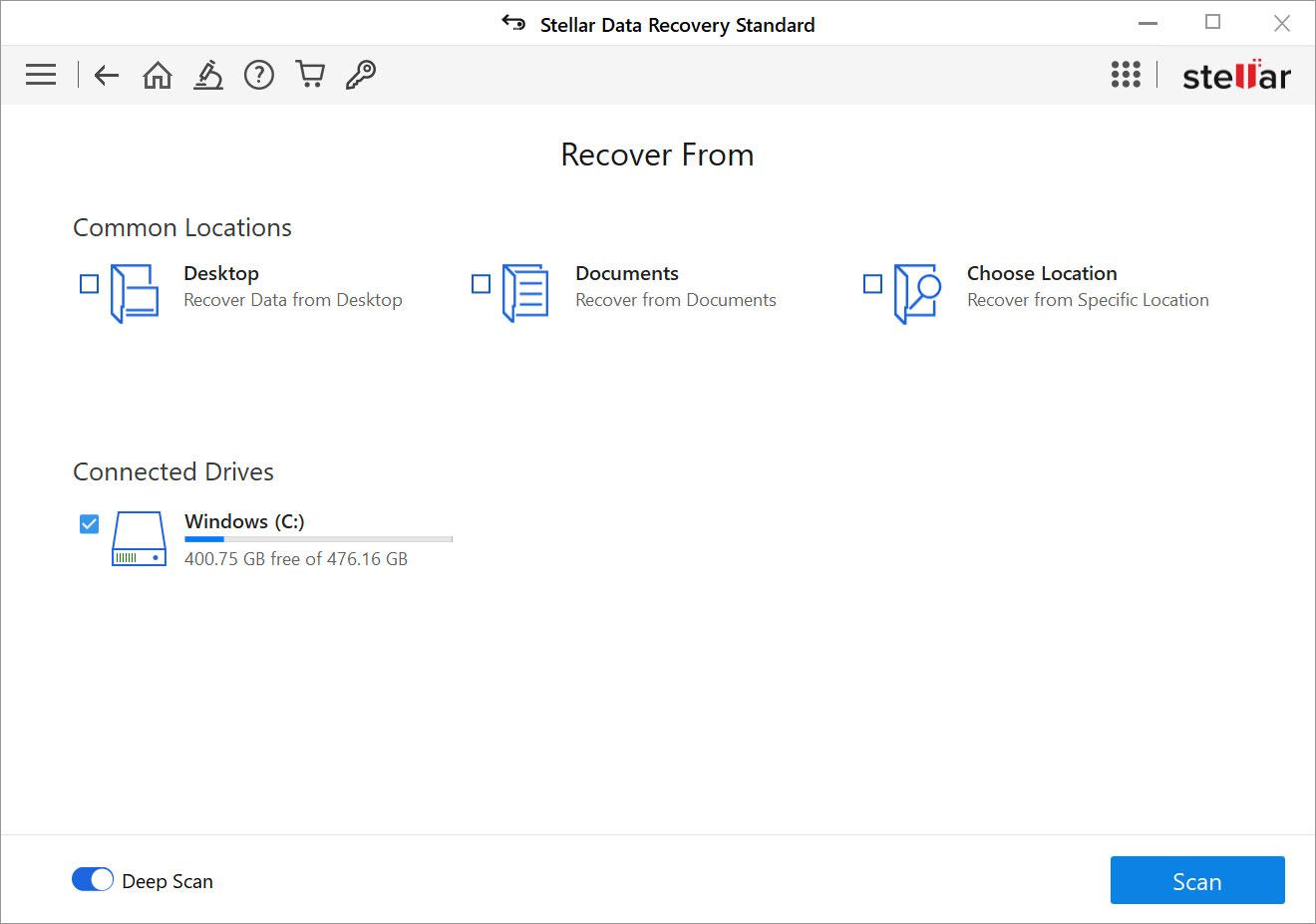
  • Click Next to proceed. Afterward, the ‘Recover from’ screen will appear. You will have to select the location/drive from which you delete the files.
  • After selecting the drive/location, click Scan.
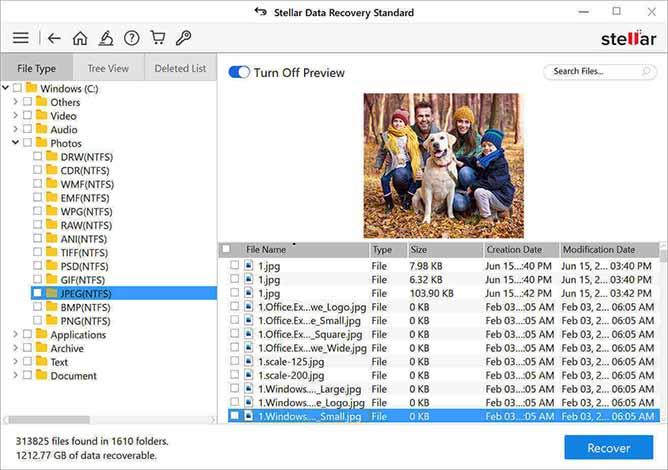
  • Once the scanning process is completed, all the lost files will display on the screen under three panes, i.e., File Type, Tree View, and Deleted List.
    h. Find your files in the Deleted List, select the ones you want to retrieve, and click recover.
  • Now, click Browse to choose the desired location to save the retrieved files from the drop-down list.
    Once done, click Start Saving to store the recovered files.

[Note: Don’t choose the same drive (from which you deleted the files) as the storage location. Always use an external storage drive or another location on your Windows PC to avoid data overwriting.]

Preventive measures to avoid permanent file loss!

There are a few tips we would like to share with you that may help you prevent file loss in the future, given as follows:

  • Immediately stop using the drive from which you lost your files and other data to prevent data overwriting. When you delete files, the space becomes available. However, the file remains there and can be recovered. But if you keep adding more data to it, space will be overwritten, and the files will not be recovered even with the help of a data recovery tool.
  • Always keep your PC/laptop virus-free, as a virus may create havoc on the system. Run the latest antivirus program to detect any virus on your PC and get rid of it. This way, you will save your data and keep your PC in good health. So, always use an updated Antivirus program on your PC and keep using it frequently.
  • Take a backup of your data regularly. Keeping a backup is the easiest way to get back access to the lost files, documents, and more.
  • Always keep a robust and reliable data recovery tool handy so that you can quickly restore your lost or deleted files.

Conclusion

The blog outlined some best methods to recover files from Recycle Bin on a Windows PC. Retrieve the deleted files from the Recycle Bin if they got deleted only using the Del key. However, if you mistakenly emptied the Recycle Bin or deleted the files using the Shift + Del key, you may use your Backup to recover files deleted from the Recycle Bin. Even if there’s no backup, Recycle Bin recovery is still possible with a data recovery tool such as Stellar Data Recovery. This DIY software can help you extract data even from formatted, corrupted, or encrypted storage devices.

The Cost of Custom Software Development: Key Factors Influencing the Budget and Ways to Optimize It

0

We will go into some details in this article about the costs associated with custom software development and offer tips to mitigate expenses, yet still ensure quality assurance so that corporations maximize the benefits of their outlays. 

Costs in Custom Software Development- What Contributes to That Most

Project Scope and Complexity

The proportion and intricacy of the project ranks most top cost factors. Development of a simple application that only performs certain tasks will take less resources than developing an all-in-one mobile application for a business.

Small example: A simple niche storage application would almost certainly cost far less than designing any custom built online shopping application with all the features like inventory management, machine learning for product recommendations, fifteen languages and many more.

Effect: The more advanced projects take longer periods to develop as they require a team of experts, and also a lot of testing.

Technology Stack and Platform

The other thing that determines the cost of development is the technology stack — in this case, the lowest development cost will be for cross-platform app development. Building a native mobile application for iOS and Android, for instance, will need two different code bases which in turn duration and costs, however, this can be achieved using cross-platform frameworks such as Flutter or React Native at a lower cost.

Effect: Selection of the Technology should match the vision of the business in years to come, the level of scalability required balanced with cost and performance.

UI/UX Design Requirements

An effective interface goes and improves usability but enhances the level of customer satisfaction. Nevertheless, if one needs to create a unique UI/UX for business purposes it can also incur extra costs as it demands extra skills especially on the provision of animations or custom layouts or advanced interactions.

Design investment has a trade-off in that it incurs design costs at the beginning but results in better user retention and satisfaction.

Integration with Existing systems

Individual software development is often the developing of a new application along with its integration into the existing software- for example, a CRM or an ERP, or a payment system. These integrations often complicate the overall development and require further work to implement them into the existing system.

Impact: Improper integration strategy will increase the cost in the future due to changes of systems or inefficient use of systems.

Location of the Team and Skills

Cost of hiring developers depends on the region. Placing orders to Eastern Europe, or SE Asia allows for cost efficiency without compromising on quality. On the other hand, very particular and specialized projects can entail the recruitment of people in a high demand niche market irrespective of the location.

Comparison: There is more control when a company manages in-house employees, this comes with high fixed costs, on the other hand, outsourcing offers flexibility and is cost-effective.

Quality Control Testing & Assurance (QA)

Thorough Quality Assurance (QA) enables the provision of a good user experience and lowers costs in future maintenance; Whilst tools for automated testing may cut down on the time, the processes that involve manual testing will still be necessary in complicated systems.

Caution: Lack of appropriate testing may result in expensive mistakes occurring after products have been launched for use, which points to the necessity of investing in good quality assurance.

Post-Launch Support and Maintenance

The process of development does not come to an end with deployment. Continuous updating, fixing of bugs, and enhancement of features are key in keeping the software up-to-date and useful. This aspect requires a different allocation of resources meant for the support in the future.

Cost-Effective Solutions: Planning And Estimation

Effective Goals and Scope Management

When a project’s goals and objectives are eloquently articulated, the chances of scope creep are minimal. Scope creep entails the introduction of additional features and changes to the design, which in turn entails increased costs as well as chargeable hours during production.

Employing either, a nuanced technical outline or actually a working model can bridge the gap between the two camps, that is, stakeholders and developers.

Selection of Features

In other words, develop a Minimum Viable Product (MVP) to test the idea with bare minimum features. Other non-important features can come later depending on what the users say.

For instance, a newly established company may commence operations with a basic reservation platform and subsequently enhance it with features such as loyalty systems or integrated business intelligence tools.

Using Off-the-Shelf Options to the Maximum

Benefits associated with the use of opens-source libraries and third party web development applications can be used to cut the project development time and budget drastically.

Warning: Excessive use of the assembled parts can result in the loss of the creative power of the project, hence choosing when to use them is very important.

Choosing the Right Development Team

In assessing potential vendors or freelancers, their expertise, portfolio, and the reviews of their previous clients come handy. Seek for teams that have handled such projects before in order to cut down onboarding time and enhance efficiency.

Investing in Scalable Architecture

Putting scalable systems in place from the very beginning saves the cost of undoing and redone as the business develops. This comprises of embracing cloud based solutions and modular system designs to cater for future expansions.

Automating Testing Processes

Automated testing tools can fast track the QA phase by catching bugs even before the development cycle is completed. Automated testing in addition to manual testing is relatively cost effective while providing full coverage.

Monitoring and Budget Control

Adopt an agile development approach to allow regular check on the progress and budget allocated. Proper communication between stakeholders and developers helps in reducing conflicts and cost escalations.

Practical Application

MVP Developing Strategies for New Ventures

One of the logistics companies has saved a considerable sum of money allocated for development by first going to the market with a minimally viable product focusing only on the key features and putting advanced analytics and reporting tools for later. This gave the company an opportunity to evaluate the market demand without incurring further costs.

Outsourcing as a way of cutting down on the costs

A retail company of mid-size scope engaged the skills of a development team located in Eastern Europe for the purpose of creating an inventory management system that is tailored to the company’s needs, thus reducing expenses by 40% as opposed to sourcing the services locally.

Minimizing Technical Debt

One of the enterprises embraced a scalable cloud-based architecture, which avoided incurring additional costs for systems that were not meant to grow as users increased.

Summation

A software project cannot be regarded as ordinary and must be considered in detail regarding cost efficiency. Among other aspects, the project scope, technology stack, and team location influence the overall budget significantly. Companies can achieve savings without diminishing the quality by employing measures including effective prioritization, the use of ready-made parts, and agile practices.

For those businesses which wish to create ‘individual’ software, as per their needs, comprehension of these aspects leads to better cost management and project success.

Can you switch from a traditional to a Zero Balance Savings Account?

0

For years, traditional Savings Accounts have been the choice of many risk-averse individuals. However, minimum balance requirements, account maintenance fees and limited fund access are driving savers to open Savings Bank Accounts online with no average monthly balance conditions.

Serving as an alternative to regular Savings Accounts, Zero Balance Savings Accounts offer a flexible way to save money and access banking services. This prompts individuals to switch to or open online account with zero balance.

Is it possible to switch from a traditional Savings Account to a Zero Balance Savings Account? 

The possibility of switching from a traditional Savings Account to a Zero Balance Savings Account depends on the bank’s specific policies and terms. While some banks may allow you to switch, others won’t.

However, instead of switching, you can choose to open online account with zero balance. By doing so, you can take advantage of the unique features and benefits of a Zero Balance Savings Account.

Perks of opting for Zero Balance Savings Account

Here are some of the top benefits of opting for the open online account with zero balance option:

  • No MAB requirements : A Zero Balance Savings Account allows you to operate your account without worrying about falling below the specified minimum balance threshold.
  • Improved flexibility: With a Zero Balance Savings Account, you can make numerous withdrawals and deposits and do fund transfers between accounts whenever you want without restrictions.
  • Enhanced liquidity: Zero Balance Savings Accounts provide instant access to funds, ensuring that you are prepared to meet life’s unexpected events with confidence. 
  • Easy access: Offering 24/7 access to banking services, a Zero Balance Savings Account allows for quick transactions and offers the flexibility to manage accounts remotely.

Documents required to open online accounts with zero balance 

  • Proof of address and proof of identity (PAN card, Aadhaar card, Passport, Voter ID or NREGA job card)
  • Recent utility bills
  • Two latest passport-size photographs
  • Duly filled account opening form
  • A duly signed self-declaration stating that you do not have any other Savings Account in the chosen bank.

Step-by step guide to open online accounts with zero balance 

  1. Visit the official website of your chosen bank.
  2. Choose the “Savings Account” option.
  3. Out of the multiple Savings Accounts variants displayed, choose Zero Balance Savings Account.
  4. Select “Open Online” to start the account opening process.
  5. Enter your PAN number, mobile number and Aadhaar number.
  6. Mark the checkbox and click on “Proceed”.
  7. Fill out the open online accounts with zero balance form accurately and upload the required documents.
  8. Verify your KYC details to activate your Zero Balance Savings Account and enjoy hassle-free banking.

Who should consider opening a Zero Balance Savings Account?

Opening a Zero Balance Savings Account is highly beneficial for various individuals, particularly for those who:

  • Face challenges in maintaining the monthly average balance and the charges associated with it.
  • Value flexibility in managing finances.
  • Need banking solutions at a low fee.
  • Demand easy access to funds.
  • Seek attractive interest rates without compromising on liquidity.
  • Wish to withdraw and deposit money in their account as needed.
  • Want a hassle-free banking experience.

Summing up

Opening a Zero Balance Savings Account can be a wise decision, especially for individuals who want to avoid the minimum balance requirements and restricted access to funds.

However, to reap the rewards of a Zero Balance Savings Account, you must follow the key steps involved in the process to open online accounts with zero balance and an account change process. By doing so, you can avoid unnecessary disruptions during conversion and successfully make a seamless transition.


Are Dividend Stocks a Safe Haven in a Volatile Market?

0

Stock prices can fluctuate significantly because of geopolitical tension, economic uncertainty, and unpredictable global occurrences, leaving investors to deal with uncertainty. Investors head for safe haven in such turbulent times.

For many years, dividend stocks have been considered a potential safe haven in periods of turmoil. In this blog, we will explore the world of dividend stocks and will discover whether they are truly a safe haven in a volatile market or not.

What Are Dividend Stocks?

Dividend stocks are shares in companies that return part of their profits as dividends to their shareholders in the share market.

Depending on the company policies, these payments can be made quarterly, semi-annually, or annually.

Dividend stocks come from well-established companies that have a history of profitability and stable cash flows and operate in sectors like utilities, consumer staples, and healthcare. It offers investors an additional source of income along with long-term gains.

Let’s look at dividend stocks that have demonstrated resilience in recent volatile markets:

  1. Indian Oil Corporation Ltd

Indian Oil Corporation Ltd (IOCL) is one of the biggest oil companies in India. Established in 1959, it produces and explores natural gas and crude oil in India and markets, distributes, and refines petroleum products.

The government owns the majority of the company, which has an impressive dividend yield of 8.33%. For the past five years, the company has regularly distributed dividends among its shareholders and has a strong dividend track record.

  1. Coal India Ltd

Coal India Ltd, is one of the largest coal-producing companies in the world. It was established in 1975.

The Ministry of Coal, Government of India, oversees its operations, and it contributes significantly to the country’s overall coal production. Coal India Ltd. has a dividend yield of 5.72%.

Why Investors Prefer Safe Haven in Dividend Stocks

The popularity of dividend stocks has several reasons. Some of these reasons are:

Steady Income Stream

Regular income is one of the biggest attractions for dividend stocks. The consistent cash flow from dividends offers investors financial security in volatile markets, where capital gains can be unpredictable.

Lower Volatility

Dividend-paying companies are often large, established firms with stable business models. Thus, their stock prices are less volatile than stocks of those companies that are in their growing phase or are comparatively smaller. This relative stability of dividend stocks appeals to investors in market downturns.

Potential for Capital Appreciation

In addition to their income potential, dividend stocks can also provide capital appreciation. Dividends can be reinvested over time which will generate compound returns and can lead to massive gains. This combination of income with growth is very interesting. Many investors find the combination very attractive and thus add dividend stocks to their portfolios.

Inflation Hedge

Dividend growth can also be a hedge in periods of rising inflation. Companies regularly increase their dividends in response to rising costs and growing profits. In other words, the more inflation rises, the more income these stocks will generate, which will help investors maintain their purchasing power.

Conclusion

Dividend stocks can be a safe haven in volatile markets as they provide steady income, less volatility, and the potential for capital appreciation. But like any other investment strategy, they also involve some amount of risk.

Through extensive research, portfolio diversification, and a long-term view, investors can benefit from dividend stocks and overcome potential downsides of the stock market investment. In uncertain times, dividend stocks can be a reliable ally in navigating the turbulent waters of the stock market.

What Makes a Good Family Lawyer Website Design?

0

An effective family lawyer website design is essential for attracting and converting potential clients in search of reliable legal guidance. For many, a law firm’s website is their first point of contact, so it’s important that the site reflects professionalism, accessibility, and empathy. With thoughtful design, a family law website can effectively communicate the firm’s values while offering an easy-to-navigate user experience. In this article, readers will discover what makes best law firm websites both functional and engaging, including essential design elements that help build trust, foster connection, and improve user satisfaction.

Prioritize User-Friendly Navigation

For family law websites, user-friendly navigation is a top priority, as clients are often seeking answers during challenging times. Effective navigation ensures visitors can easily find essential pages like services, attorney profiles, FAQs, and contact information without unnecessary clicks. A clean menu structure with clearly labeled sections, drop-down options for different services, and a search bar improves usability and keeps visitors from feeling overwhelmed.

An intuitive layout increases the likelihood that visitors will stay on the site and explore. This can lead to higher engagement, as well as improved search engine rankings, since search engines favor sites where users spend more time. When visitors can locate answers quickly, they’re more likely to trust the firm’s website as a valuable resource, making streamlined navigation a core aspect of successful family lawyer website design.

Use a Warm and Professional Visual Design

A family lawyer website should balance warmth with professionalism, creating a welcoming yet authoritative first impression. Visual design elements—such as color schemes, fonts, and imagery—convey the firm’s personality and values. Calming colors, like blues, greens, or soft neutrals, can evoke feelings of trust and comfort, which is especially valuable in family law, where clients often seek reassurance.

Carefully chosen visuals, such as images that reflect family unity or legal professionalism, also help clients feel that they’re in the right place. Fonts should be clean and easy to read, reinforcing clarity and accessibility, while the overall layout should avoid clutter, with plenty of white space for a serene, organized appearance. By using visual design to create a professional yet approachable environment, family lawyers can better connect with clients looking for compassionate support.

Highlight Client Testimonials and Success Stories

Showcasing client testimonials and success stories is an effective way to build trust with visitors. For potential clients, hearing directly from others who have had positive experiences with the firm can provide reassurance and confidence in the firm’s capabilities. A dedicated testimonials section on the website, or strategically placed quotes on the homepage and service pages, helps convey authenticity and reliability.

Success stories, in particular, can illustrate the firm’s approach and dedication to achieving favorable outcomes. Including specific, relevant cases (while maintaining client confidentiality) gives visitors insight into the firm’s expertise in handling situations similar to their own. By integrating these elements, family lawyer website design goes beyond just listing services—it humanizes the practice and fosters a sense of trust that’s invaluable when clients are making critical decisions about legal representation.

Incorporate Clear Calls to Action (CTAs)

Clear and inviting calls to action (CTAs) guide visitors toward taking the next step, whether it’s booking a consultation, filling out a contact form, or learning more about the firm’s services. Effective CTAs use simple, action-oriented language like “Schedule a Free Consultation” or “Contact Us for Family Law Support.” These prompts make it easy for potential clients to reach out, especially if they’re unsure of the next steps or need immediate help.

Placement is key: CTAs should be present on key pages, such as the homepage, service descriptions, and even within blog posts. Well-placed CTAs help improve engagement by making contact options accessible at relevant moments in a visitor’s journey. By using CTAs that are both clear and strategically positioned, a family lawyer website design can help potential clients easily transition from browsing to actively seeking legal assistance.

Include Informative and Relevant Content

Informative content not only improves a website’s SEO but also demonstrates the lawyer’s expertise and commitment to client education. Family law clients often have specific questions about topics like divorce, custody, and mediation, so including blog posts, FAQs, and detailed service pages on these subjects can help address their concerns. This type of content supports visitors who may be researching their options, providing valuable insights before they even schedule a consultation.

Relevant content also signals that the law firm understands and addresses common family law challenges, positioning it as a knowledgeable resource. Blog articles on topics such as “What to Expect in a Custody Hearing” or “How to Navigate Divorce Mediation” give clients confidence in the firm’s expertise and readiness to guide them through difficult situations. Informative, accessible content strengthens a family lawyer website’s value, making it a trusted resource for both current and prospective clients.

Ensure Mobile Compatibility and Fast Loading Times

A responsive website adapts seamlessly to different screen sizes, providing a positive experience for users regardless of the device they’re using. Mobile-friendly family lawyer website design allows users to easily navigate, read content, and contact the firm, which enhances accessibility and improves overall user satisfaction.

Fast loading times are equally important. Slow-loading sites frustrate users, increasing the likelihood they’ll leave the page and look for other options. Ensuring that images are optimized, reducing unnecessary animations, and using streamlined code can help improve loading speeds. Quick, responsive design not only keeps visitors engaged but also positively impacts search rankings, as search engines favor websites that offer a seamless experience. Together, mobile compatibility and fast loading times make a family lawyer website both accessible and functional, meeting client expectations for efficiency and ease of use.

Conclusion

Creating a successful family lawyer website design requires a careful balance of user-focused features and professional presentation. By prioritizing user-friendly navigation, warm visual design, client testimonials, clear calls to action, informative content, and mobile compatibility, family law firms can create a site that builds trust and encourages client engagement. Each of these elements contributes to a cohesive experience that helps potential clients Discover a welcoming and knowledgeable resource, ultimately increasing the likelihood they’ll reach out for support. Thoughtful website design goes beyond aesthetics—it provides family law clients with a positive first impression and an easy path to connecting with trusted legal professionals.

Expat Insurance: Secure Your Global Lifestyle

0

The world is getting smaller, and more people are living abroad. They might be working, retiring, or just exploring new places. It’s crucial to have expatriate health insurance and global insurance policies for peace of mind.

Expat insurance acts as a safety net. It offers international coverage that local policies can’t match for those living abroad. It helps manage risks and navigate healthcare systems in foreign lands.

With the right insurance, expats can live their lives abroad confidently. They can enjoy their new environments without worry.

The Importance of Expat Insurance

Living abroad is full of new experiences, but it also has its challenges. Healthcare and property protection are big concerns. Expat insurance is made for expats, offering full coverage wherever they are.

Why You Need Expat Insurance

Local insurance often doesn’t cover international situations well. This puts expats at risk of big medical bills if they get sick or hurt abroad. With international health coverage, they can get quality care anywhere, feeling safer and healthier.

Coverage Options Available

There are many types of expat insurance to protect them medically and financially. Global medical insurance is key, offering essential health coverage worldwide. Expatriate protection also matters, covering personal items and potential legal issues. This helps avoid unexpected financial problems.

How to Choose the Right Expat Insurance

Choosing the right expat insurance can be tough with so many options. It’s important to look at different factors. This will help you find the best insurance for expats, giving you the coverage you need.

Factors to Consider

  • Coverage Limits: Know how much coverage your policy offers. Look at what’s included and what’s not.
  • International Portability: Make sure your policy works in many countries. This ensures you’re always covered.
  • Pre-Existing Conditions: Check if your policy covers health issues you had before. This is key for good coverage.
  • Customer Support Quality: Good customer support is crucial. It helps a lot when you’re dealing with health issues abroad.
  • Claims Processing: How easy is it to file a claim? This is important for choosing your insurance.

Comparing Insurance Providers

Comparing insurance providers is a must. Look at important details to make a smart choice:

  • Policy Offerings: Compare the different policies. See which one fits your needs best.
  • Customer Testimonials: What do other expats say about their insurance? Their experiences can be very helpful.
  • Claim Settlement Ratios: A high claim settlement ratio means the provider is reliable and efficient.

By carefully looking at these factors and comparing providers, you can find the best insurance for expats. This ensures you have the protection and support you need while living abroad.

Understanding the Benefits of Expat Insurance

Living abroad requires protecting your lifestyle, and expat insurance is key. It offers more than just health coverage. It ensures your safety in all areas of international living. This includes healthcare and many other services to keep expats at ease.

Emergency evacuation and repatriation are big pluses. If you need urgent medical care that’s not available locally, insurance covers the cost. This is vital for your health and property safety abroad.

Comprehensive plans also come with support services. You get multilingual help and 24/7 customer care. This makes dealing with healthcare in foreign countries much easier.

Insurance often covers your property, legal issues, and even political unrest or natural disasters. This means your health, belongings, and legal rights are all protected. These wide-ranging benefits show why expat insurance is a must-have for those living abroad.

AiDot Linkind Smart Spotlight SL5 Review – A Must-Have for Outdoor Lighting

0

When it comes to outdoor lighting, few products have impressed me as much as the Linkind Smart Spotlight SL5, a standout from Linkind, a brand of AiDot. This solar-powered spotlight doesn’t just perform well; it brings a level of creativity and customization I didn’t expect, especially with its Halloween Light Show and ready-made Halloween presets. After spending some time testing the SL5, here’s my take on what makes this product a must-have for outdoor lighting enthusiasts.

Setup and Installation

Setting up the SL5 was a breeze. It’s designed to be solar-powered, which means no complicated wiring or need to worry about battery life. The light comes with a sturdy ground spike for easy placement in your yard or garden, but it can also be mounted on a wall if you prefer. The adjustable spotlight head makes it simple to point the beam exactly where you need it, whether that’s highlighting a beautiful garden feature or, in my case, setting the stage for some spooky Halloween decorations.

Performance and Brightness

On a technical level, the SL5 delivers powerful illumination, with adjustable brightness settings that can go from a soft glow to a vibrant spotlight. The solar efficiency is excellent—I didn’t notice any drop in brightness even after overcast days. 

But what really sets the SL5 apart is its smart features.

Halloween Light Show & Presets

Now, let’s talk about what I was most excited to test—the Halloween Light Show. The SL5 does not disappoint. Within the AiDot App, there are pre-set lighting effects designed specifically for Halloween, including haunting purples, eerie oranges, and flickering light patterns that are perfect for creating a spooky atmosphere. The light show even syncs with rhythmic lighting effects, adding a dynamic feel to your outdoor decor.


These presets were incredibly easy to activate and customize. You can choose different lighting effects, such as a slow fade between eerie colors or a strobe effect that mimics lightning flashes. I used the SL5 to light up the pathway to my front door, and the ambient effects truly made my yard stand out. It caught the attention of trick-or-treaters and neighbors alike. The syncing transitions between colors were smooth, and the low-latency effects worked perfectly with the app, ensuring there was no lag.

Customization and Smart Features

Using the AiDot App, you can adjust the lights to suit any occasion or mood, with millions of colors and custom timers. You can even create your own personalized light shows, which makes the SL5 great for both holiday decorations and everyday use. There’s also an asynchronous mode that lets you have different lights in your yard show different effects simultaneously, making for an even more immersive experience.

The app allows for smart automation, so the lights can turn on and off based on sunrise/sunset schedules or when you’re nearby, thanks to its geo-fencing feature. I found this particularly handy for daily use—no need to manually control the lights after the initial setup.

Verdict

The Linkind SL5 is a standout option for anyone looking to add versatile, eco-friendly lighting to their outdoor space. Its durable design, customizable features, and impressive brightness make it perfect for year-round use. The Halloween Light Show preset adds a delightful seasonal twist that is sure to be a hit during the spooky season.

Whether you’re looking to enhance your garden or create a haunted house atmosphere, the Linkind SL5 is a smart, solar-powered solution that delivers on both performance and festive fun.

Pros:

  • Solar-powered, eco-friendly design
  • Bright 650-lumen output with multicolor RGB options
  • Halloween-themed light show with music sync
  • Customizable presets for year-round use

Cons:

  • Solar charging may be slower in areas with limited sunlight

If you’re ready to take your Halloween décor to the next level or simply want a reliable outdoor spotlight, the Linkind Smart Spotlight SL5 is a fantastic choice.

How Virtual Private Servers Improve Website Uptime and Reliability

0

Website uptime and reliability are critical for businesses that depend on their online presence to generate revenue, engage customers, and build brand credibility. Frequent downtime or performance issues can lead to frustrated users, lost sales, and a damaged reputation. To ensure that websites are always available and performing at their best, many businesses turn to Virtual Private Servers (VPS) for hosting. VPS hosting offers a range of benefits that significantly improve uptime and reliability, making it a smart choice for businesses of all sizes. Here’s a closer look at how VPS improves website uptime and reliability.

1. Dedicated Resources Ensure Consistent Performance

One of the key advantages of VPS hosting is that it provides dedicated resources. Unlike shared hosting, where server resources like CPU, RAM, and storage are shared among many users, VPS ensures that each website has its own isolated environment. This means that the performance of your website isn’t affected by other users on the same server, which is a common issue with shared hosting.

By having guaranteed resources, your website can handle traffic spikes, complex applications, and high volumes of transactions without slowing down or crashing. This results in a more consistent performance, which directly contributes to better uptime and reliability.

2. Improved Server Stability

Shared hosting environments can be prone to stability issues because server resources are shared among numerous websites. If one site on a shared server experiences a surge in traffic or suffers from a technical problem, it can impact the performance and stability of all other websites on that server. This can lead to increased downtime for your website, even if the issue isn’t related to your site.

With a VPS, your website operates independently from other users on the same physical server, meaning that you’re insulated from the potential issues that can affect shared hosting environments. This isolation ensures greater stability and minimizes the risk of downtime caused by external factors.

3. Scalability for Handling Traffic Surges

One of the challenges of maintaining high website uptime is managing sudden increases in traffic, such as during product launches, sales events, or marketing campaigns. Many websites experience downtime or performance slowdowns during these periods because their hosting can’t handle the increased demand.

VPS server hosting offers scalability, allowing you to easily upgrade your server resources—such as RAM, CPU, and bandwidth—to accommodate traffic spikes. This ensures that your website remains accessible and performs optimally, even during high-demand periods. Being able to scale resources without downtime is a significant advantage of VPS hosting, as it ensures that your website can adapt to changes in traffic without compromising reliability.

4. Better Control Over Server Configuration

VPS hosting gives you root access to your server, providing full control over its configuration. This allows you to optimize server settings specifically for your website’s needs, improving performance and reducing the risk of downtime. For example, you can fine-tune the server to handle high loads, implement caching mechanisms, and install custom software to optimize performance.

Additionally, VPS hosting allows you to configure security measures such as firewalls and intrusion detection systems, which can prevent attacks that might otherwise cause downtime. By tailoring your server environment to meet your website’s specific needs, you’re ensuring better uptime and reliability.

5. Enhanced Security Features

Security plays a significant role in website uptime and reliability. Cyberattacks, such as Distributed Denial of Service (DDoS) attacks, can overwhelm servers and cause websites to go offline. VPS hosting provides enhanced security features that protect your website from these types of attacks. Many VPS providers offer DDoS protection, firewalls, and regular security updates, helping to safeguard your site from potential threats.

Moreover, since a VPS is isolated from other users on the server, the risk of security vulnerabilities spreading from one site to another is significantly reduced. This additional layer of security ensures that your website remains safe, stable, and operational.

6. High Uptime Guarantees from Hosting Providers

Many VPS hosting providers offer high uptime guarantees, typically around 99.9% or higher. This means that your website is virtually always online and available to users. Uptime guarantees are backed by Service Level Agreements (SLAs), which outline the hosting provider’s commitment to maintaining a certain level of service. In cases where uptime falls below the guaranteed threshold, providers often compensate clients, further incentivizing them to ensure reliable service.

These uptime guarantees give businesses peace of mind, knowing that their websites will remain available to users without frequent interruptions.

Conclusion

For businesses seeking to improve website uptime and reliability, Virtual Private Servers (VPS) offer a robust hosting solution. With dedicated resources, improved server stability, scalability, and enhanced security, VPS ensures that websites remain accessible and perform consistently, even under heavy traffic or in the face of potential threats. By providing better control over server configurations and offering high uptime guarantees, VPS hosting helps businesses to maintain a strong and reliable online presence, ultimately leading to better user experiences and sustained growth.

The Impact of Tron’s Market Cap on the Future of the iGaming Industry

0

Despite the initial hesitance to adopt cryptocurrencies, blockchain’s decentralized and secure nature provides an ideal framework for addressing many of the issues that have traditionally plagued the iGaming industry, such as transparency, trust, and security. Tron (TRX) is one of the most prominent crypto assets and blockchain platforms that are contributing to the growth of the iGaming industry. Known for its high transaction speed, scalability, and decentralized infrastructure, Tron is quickly becoming a leading choice for developers within the iGaming sector. Tron’s constantly increasing market capitalization (market cap) shows that cryptocurrency has the potential to reshape the iGaming landscape. 

While it may not seem obvious, there’s a relationship between Tron’s market cap and the future of the iGaming industry. This piece will explore how Tron’s market cap influences the iGaming industry, the benefits and challenges Tron brings to the table, and what the future might hold for this relationship.

Alt: Physical tokens of cryptocurrencies

Understanding Tron’s Market Cap

Before delving into its impact on iGaming and the concept of a Tron casino, it’s essential to understand what market capitalization signifies for a cryptocurrency like Tron. A cryptocurrency’s market cap is calculated by multiplying the total supply of its tokens by the current market price of one token. This figure reflects the overall value of the network and can be a crucial indicator of its growth, stability, and market position.

As of today, Tron is one of the latest crypto assets and blockchain networks worldwide. According to Coinmarketcap, this crypto asset has a market cap of $13.36 billion. As the market cap increases, it’s a clear sign of investor confidence, strong community support, and future growth potential. Tron’s steadily increasing market cap is also a testament to its growing utility, both in decentralized finance (DeFi) and in sectors such as iGaming, which are tapping into blockchain for its benefits.

The Growing Synergy Between Tron and iGaming

The iGaming industry has always been quick to adopt new technologies, and blockchain is no exception. With its fast transactions, low fees, and decentralized nature, Tron is particularly suited for the iGaming space and is acceptable on several crypto casinos. Let’s break down how Tron’s market cap and volume affect the iGaming sector. 

Increased Trust and Credibility

As mentioned earlier, a high crypto market cap is an indicator of greater trust and credibility for a blockchain network. You’ll be excited to know that trust and credibility are particularly important in the iGaming industry, which is historically fraught with concerns about fairness, fraud, and the security of financial transactions. Tron’s increasing market cap shows that it is a stable, widely-accepted network, which can reassure both iGaming operators and players that their transactions and games are secure.

Development of Decentralized Gaming Platforms

As Tron’s market cap grows, so too does its ecosystem. While not as profound as other crypto tokens like Bitcoin and Ethereum, the extensive growth of this token has attracted many developers of the cryptocurrency’s robust blockchain as they aim to benefit from its scalability and low transaction costs, enabling the creation of decentralized gaming platforms. These decentralized gaming platforms are more transparent, offer provably fair games, and eliminate the need for intermediaries, ensuring that online gamblers can wager with little or no hassle. Tron’s market cap growth also means that the network will continue to attract and support these developers, leading to a more vibrant and innovative iGaming landscape.

What are the Benefits of Tron to the iGaming Industry?

Tron’s presence in the iGaming sector offers several advantages that can significantly improve the gaming experience for players and the operational efficiency of iGaming platforms. These benefits are largely tied to Tron’s underlying technology and growing market cap.

Low Transaction Fees 

One of Tron’s most attractive features for iGaming platforms is its low transaction fees. Unlike traditional payment systems or even other blockchain networks, Tron’s transaction costs are minimal. This means that bettors can deposit and withdraw money at negligible costs on casinos and sports betting platforms. Lower fees also benefit operators, allowing them to retain more revenue and potentially offer better odds or bonuses to players.

High Transaction Speeds

Tron’s high throughput ensures that transactions on iGaming platforms are processed quickly. In an industry where instant transactions can enhance user experience—whether for placing a last-minute bet or cashing out winnings—Tron’s speed gives it a significant edge. This is a key differentiator for Tron, as slow transactions have been a pain point in the adoption of blockchain in iGaming.

Global Accessibility

Tron’s decentralized nature allows it to be accessed from anywhere in the world, bypassing many of the geographical and regulatory restrictions that traditional payment systems face. This global accessibility is particularly important in the iGaming industry, which caters to an international audience. Players from regions where online gambling is restricted can still access decentralized iGaming platforms built on Tron’s network, thus expanding the reach and potential user base of these platforms.

The Future of Tron and iGaming

Looking ahead, Tron’s market cap is likely to continue growing as more industries, including iGaming, adopt its blockchain technology. Several trends point to a bright future for the relationship between Tron and iGaming. 

To start with, Tron has a high potential for Integration with VR and Metaverse Gaming. As virtual reality (VR) and metaverse-based gaming platforms become more popular, Tron’s scalable blockchain could be a key player in enabling these immersive experiences. Decentralized gaming within the metaverse could also open up new opportunities for iGaming platforms to offer interactive and immersive casino experiences, where players can gamble with TRX in a virtual casino. But that’s not all. 

Tron’s increasing market cap will likely fuel the growth of decentralized applications (dApps) within the iGaming sector. These dApps will offer more innovative ways for players to gamble, from decentralized poker rooms to sports betting platforms, all with the transparency and security of the Tron blockchain. As the global presence and impact of this crypto token also grows further, the likelihood of strategic partnerships and collaborations within the iGaming industry increases. 

Cheaper EVs Affecting the Demands in Europe

0

The European automotive market is in the middle of a significant transformation as more affordable electric vehicles become available. What used to be a high end market now sees a broader range of customers. As the more affordable EVs flood the market, their impact on everything from consumer trends to crude oil investing and conventional fuel demand is being increasingly felt. How affordable electric vehicles are changing demand trends in Europe and elsewhere is discussed in the excerpt below.

The Rise of Affordable Electric Vehicles

A decade ago, electric cars remained largely expensive luxury items with few options. Their high production costs, driven by expensive battery technologies together with poor economies of scale then kept them within reach of a very few consumers. However, with progress in battery technologies, government incentives, and increased competition among manufacturers, the cost of electric vehicles has been substantially lowered.

Currently, several manufacturers offer electric vehicle alternatives that are competitively priced compared to conventional internal combustion engine (ICE) cars. Moreover, models such as Renault Zoe, Volkswagen ID.3, and Nissan Leaf have popularised EVs a lot.

Lower prices of electric vehicles make them more accessible for common people, thus speeding up the transition towards ending the supply of gasoline and diesel cars. This shift involves major transformations of the automobile industry and other sectors, such as crude oil investment, due to the decline in fossil fuel demand.

Changing Consumer Behavior and Demand

The increasing accessibility to cheaper electric cars has highly affected consumers choices and demand in recent times in Europe. Besides ecological awareness, economic benefits are promoting this transformation. Government regulations also play a role in this shift. People have become more aware of the environmental impact of traditional cars and want to reduce their contribution to global warming. Electric cars can be an attractive alternative due to zero emissions and helping to improve air quality in the cities.

Besides, electric cars have low running costs, making them alluring for cost conscious buyers. Though electric cars may be more expensive compared to some internal combustion engine cars, the owners benefit from savings on fuel maintenance costs and tax benefits in different European countries. This becomes a financial benefit, especially because the energy prices and ecological taxes put on conventional fuels make conventional vehicles unviable economically.

In large measure, governmental laws determine the interest of consumers. Many European countries provide electric vehicle owners with tax incentives, subsidies, and exemptions on traffic fees. Such incentives, along with stringent emission standards for internal combustion engine cars, are stimulating the application of electric vehicles. Consumers are responding positively to these incentives, which is increasing the purchase of electric vehicles while reducing the demand for traditional automobiles.

Impact on the Automotive Industry

Conventional car manufacturers are also feeling the pressure, as demand for affordable electric cars is growing. The response of conventional car manufacturers is heavy investment in electric car models in order not to lose their shares in the market. Changing to electric cars, however does not mean just simply designing new cars. It means a thorough change of manufacturing processes, supply chains, and employee competencies.

Increasing investment by manufacturers in battery technology extends the range of electric vehicles, making them more efficient but cheaper continues, as evidenced by large scale battery production facilities currently under construction across Europe. They also forge partnerships with technology companies to enhance the software and connectivity features of their electric vehicles to bring additional value to customers.

Growing demand for EVs disrupts the more conventional auto supply chain. A no-emission vehicle has fewer moving parts than a gasoline powered car; it doesn’t need an engine, transmission, exhaust system, and so on. That shift sends suppliers deeply rooted in the automotive sector off chasing other opportunities, including making components for batteries and electric drivetrains.

Effects on the Energy Sector and Crude Oil Investing

Increased adoption of electric vehicles in Europe is going to take its toll on the energy sector, especially investment in crude oil. The more consumers shift towards EVs, the more the consumption of petrol and diesel decreases. This is already evident in countries such as Norway and the Netherlands, which have registered a decline in fuel consumption due to high rates of EV adoption.

Crude oil investors have to address the various and complex questions about what electric vehicles mean for oil consumption and prices. The transportation sector is one of the biggest users of crude oil, and it would mean a structural decline in demand if there is any significant movement towards electric vehicles. This will impact the profitability of oil companies over time. Therefore, investors are reassessing their long-term strategies of investment in the oil sector by weighing both the risks and opportunities related to the transition toward electric mobility.

Energy companies diversify their portfolio to adapt to the new landscape. Many invest in sustainable energy sources and electric vehicle charging infrastructure in order to capitalise on the growing interest in green energy. For example, huge oil companies like BP and Shell have expanded in the market for electric vehicle charging, recognising expansion opportunities as electric vehicles continue to grow.

Infrastructure and Charging Networks

Increasing adoption of electric vehicles in Europe will lead to a considerable effect on the energy industry, particularly in crude oil investments. For every rise in the number of consumers into EVs, it means a projected fall in the consumption of gasoline and diesel. This has already been witnessed by countries such as Norway and the Netherlands, whose fuel consumption has started to fall because of high rates of electric vehicle adoptions.

Crude oil investors must make a multifaceted decision regarding how electric vehicles will impact crude consumption and, thus, its price. The transport industry, being one of the huge consumers of crude oil, may exhibit a structural decline in demand if there is any remarkable movement toward EVs. The repercussions of such an event would result in the profitability of oil companies. Correspondingly, investors rework long-term investment strategies in the oil sector, reassessing associated risk and opportunity presented by the transition toward electric mobility.

Energy companies, on the other hand, adapt to the evolving landscape through portfolio diversification. Many companies are setting up renewable energy sources and electric vehicle charging infrastructures, making the most of the growing green energy wave. For example, major oil companies like BP and Shell are extending operations in the electric vehicle charging market, recognising opportunities for growth as electric vehicles grow.

One of the biggest factors influencing the level of acceptance of electric vehicles is their development and installation of charging infrastructure. Most European countries have done a great job in building wide networks of facilities that support electric car adoptions. The public charging points are improved, residential charging opportunities are developed, and fast charging networks are extended with a view to offering convenience for electric vehicle owners and helping to solve range anxiety, a common problem witnessed among potential electric car buyers.

Leading the charge, so to speak, are countries like Germany, the UK, and France in building large scale networks of charging stations, usually with government support and privately financed. The introduction of high-power charging points that give substantial charges in a few minutes will make electric vehicles viable for long distance travel, too.

The growth in charging infrastructure is likely to not only meet the current demand for EVs but also to inspire more people to switch toward them. This is because the bigger the number of charging stations there are, some of the obstacles to owning an EV are reduced and the pool of people for whom an EV is a viable option increases. By this, some form of self reinforcing cycle can create demand and further investment in charging infrastructure.

Environmental and Societal Impacts

This shift toward more affordable EVs is at the core of multiple environmental and social implications. With fewer combustion engine vehicles on the road, the EV contributes to reduced greenhouse gas emissions and cleaner air in the urban setting. This reduced pollution becomes especially relevant for cities that are plagued by high levels of smog and respiratory issues among citizens.

Moreover, besides the environmental benefits, the development of the EV sector opens up economic opportunities. The need for new competencies in electric car manufacturing, battery development, and charging infrastructure is encouraging employment and stimulating the development of new industries. Governments and companies alike invest in educational programs to equip workers with the skills needed in these growth areas.

Worth noting is that environmental impacts from electric vehicles are not confined to the operational phase, but manufacturing, notably extraction and treatment of raw materials or batteries, also does. Efforts towards addressing such challenges involve greener technologies for batteries and a recycling economy of spent batteries.

Eventually, affordable electric automobiles will remake the demand pattern in Europe and alter the outlook of the auto and energy industry. As electric vehicles become increasingly available, people are visibly abandoning conventional petrol and diesel cars. This impacts consumer preference and enforces a change in industry approaches. The shift from gasoline-powered vehicles is not only transforming the car market but also affecting investment in crude oil as waning interest in fossil fuels questions the future prospects of the oil sector.

One such impact that creates a shift because of technological advancement, government regulations, and public appeal for a course is the development of the electric vehicle market. Despite challenges, advances in EV technology facilities and eco-friendly approaches are becoming very important to facilitate the change towards a greener, friendlier, and more efficient transport system. With this transition led by Europe towards electric cars, their repercussions are bound to strike globally, marking another new era in transportation systems and methods of energy use.